
From Marquesas to Australia in 100 days.
October 2nd, 2021.
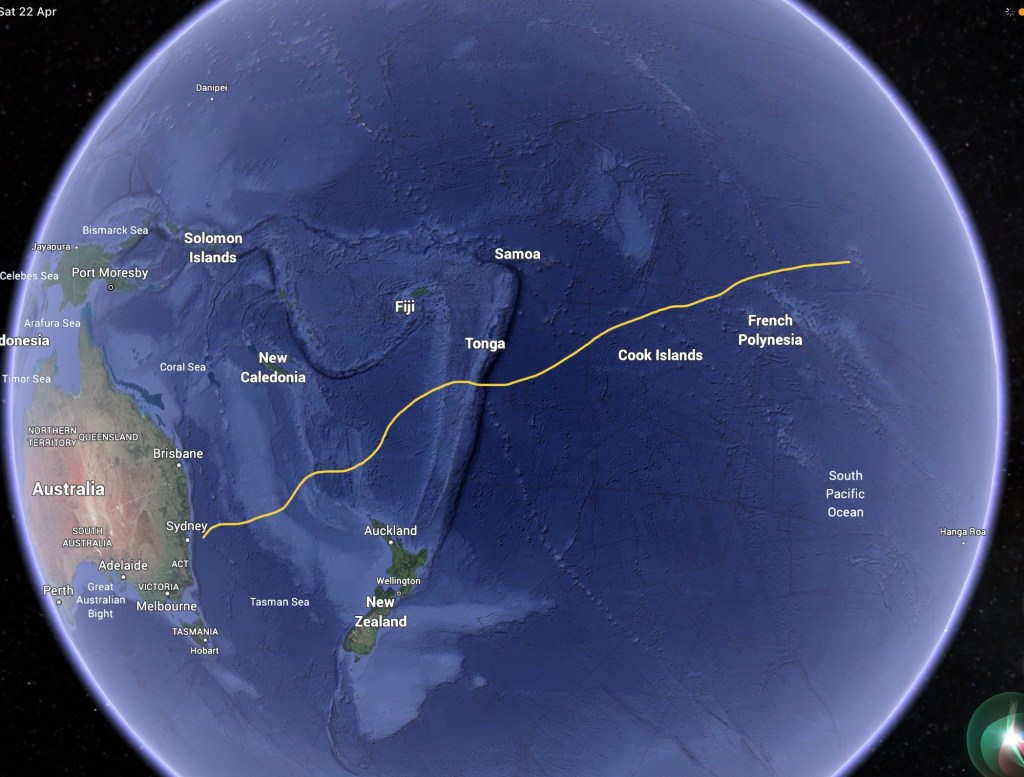
Plans are set, the new route is for Happy Days to make plenty miles and get to Australia before December 1st when the hurricane season starts and December 24 in Sydney. This is basically what we told our nephew. When we first left, we said it was for one year, then COVID came and we have been extending since. In August, the plan was to leave the boat and fly in to Australia, but as you know: “We can’t get to Australia by plane, borders are still closed”. So this time when he ask: “When are you coming back?” we said, we will be there in Sydney by Christmas 100 days from now.
His way of knowing how long we have been gone is by counting how many of his is birthdays we are missing. We were supposed to missed one, and with all the changes we are going to missed two.
Last days in Marquesas
(September 14 to September 17)
Last couple days in Marquesas, we were waiting for a good weather window to go to Fakarava. So we spent this time visiting Tahuta. This is the smallest inhabited island of the Marquesas.
We arrived in Tahuata in the Hanamoenoa Bay around 1pm. The anchorage was very nice and looked peaceful. However, there was still a swell. Marquesas is known for that, rocky anchorages, no matter where you go.
The bay is very beautiful, nice white sand with tall mountains in the background, we did a bit of swimming as Mantas are known to be there. But we didn’t see them.
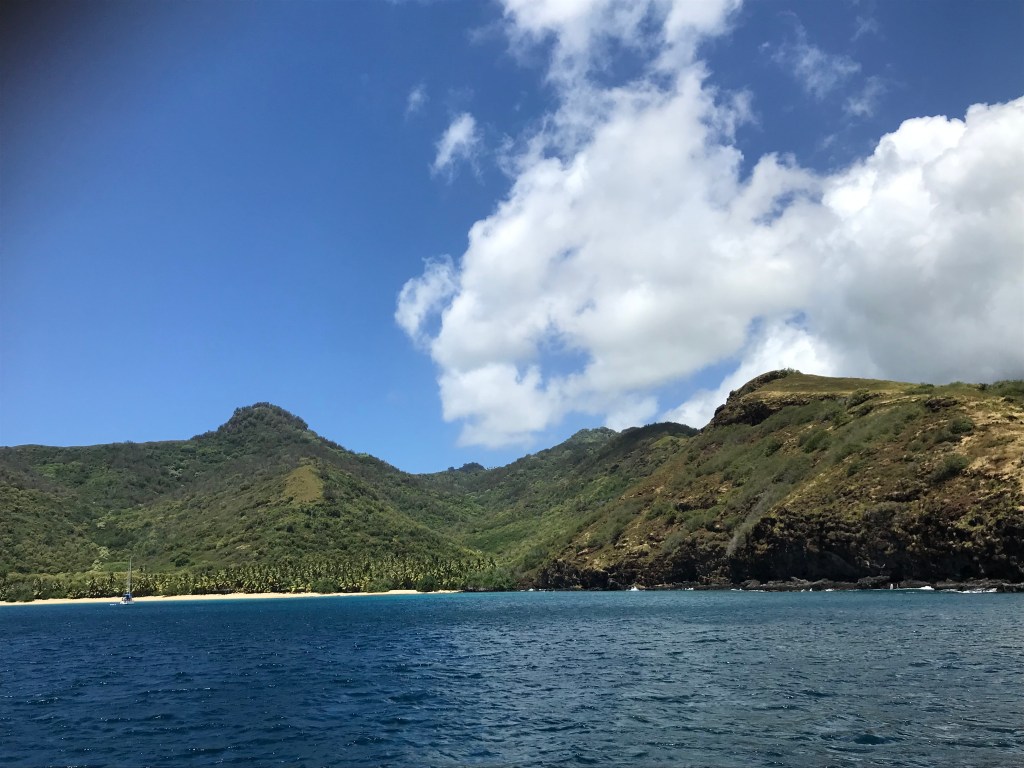
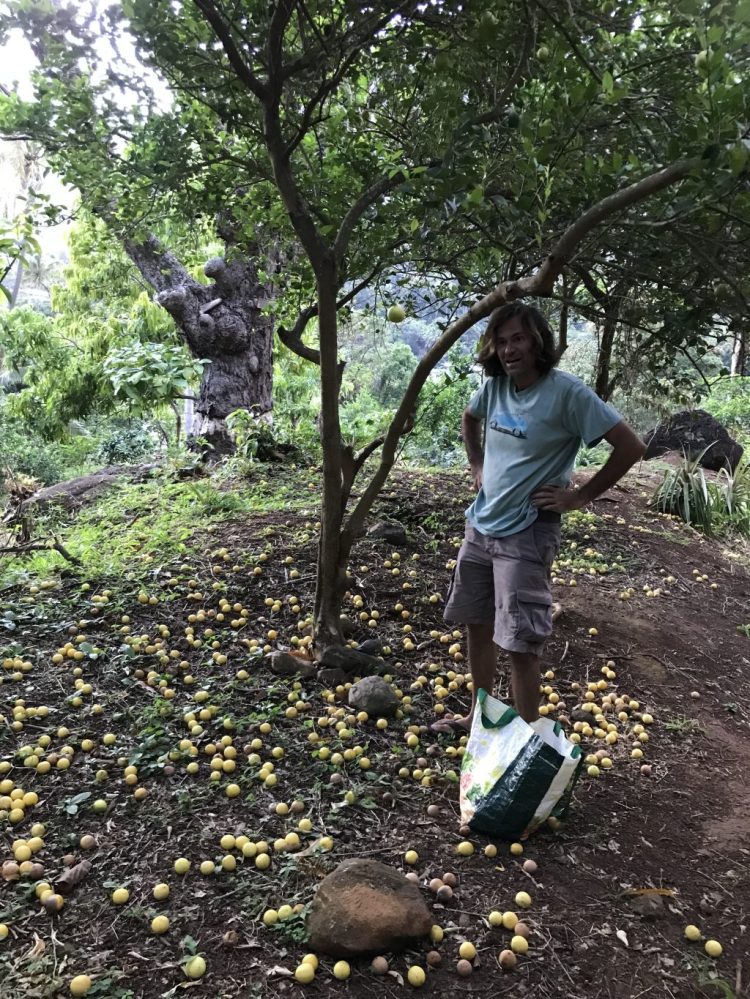
We didn’t see anyone on the bay. Did a bit of a walk and all we found was a carpet of lemons! So we pickup a couple of bags to share on our arrival in Toamotu.
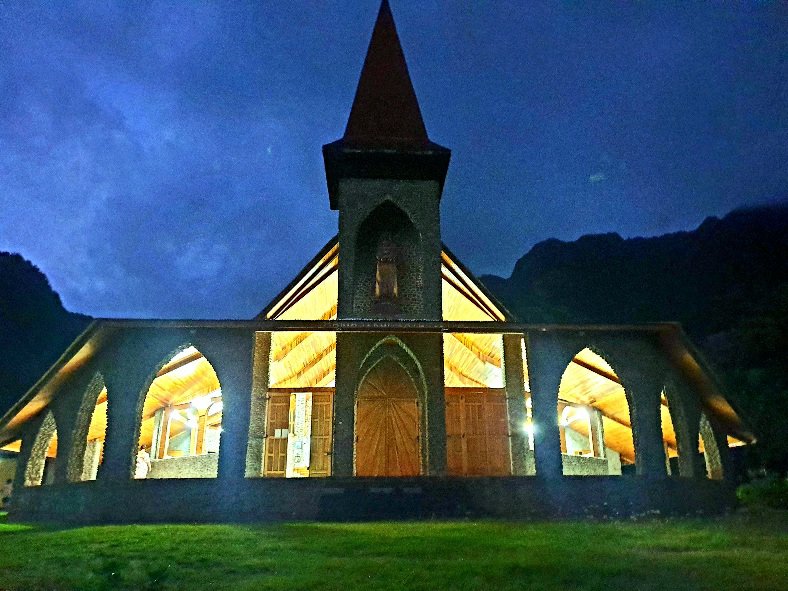
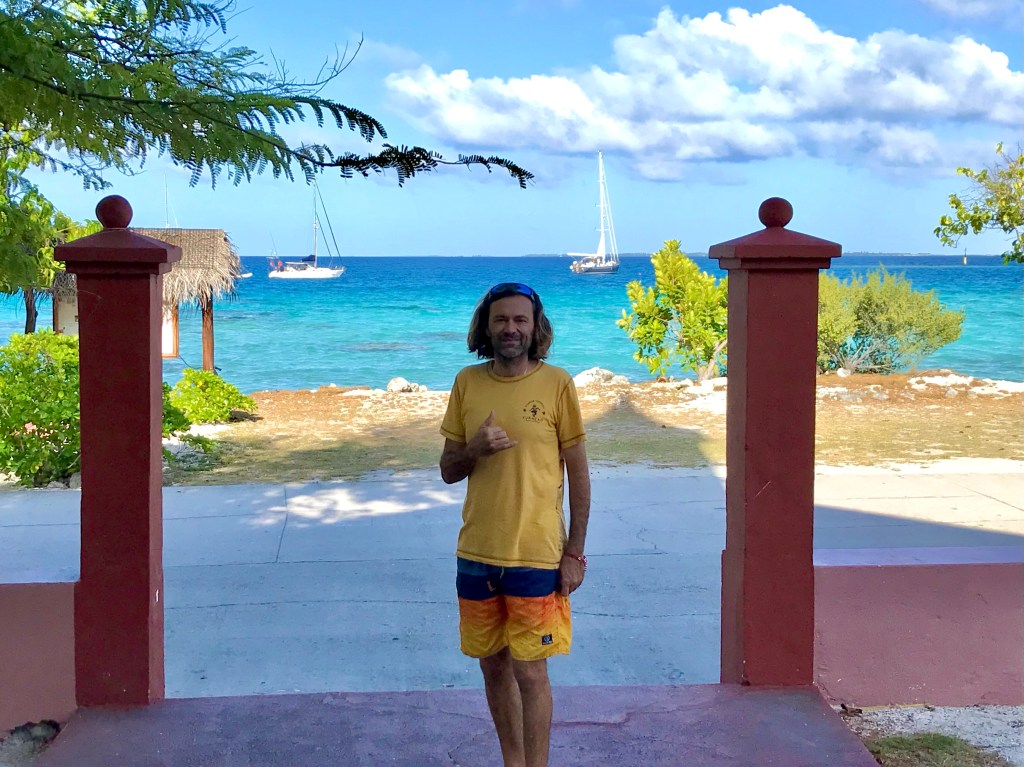
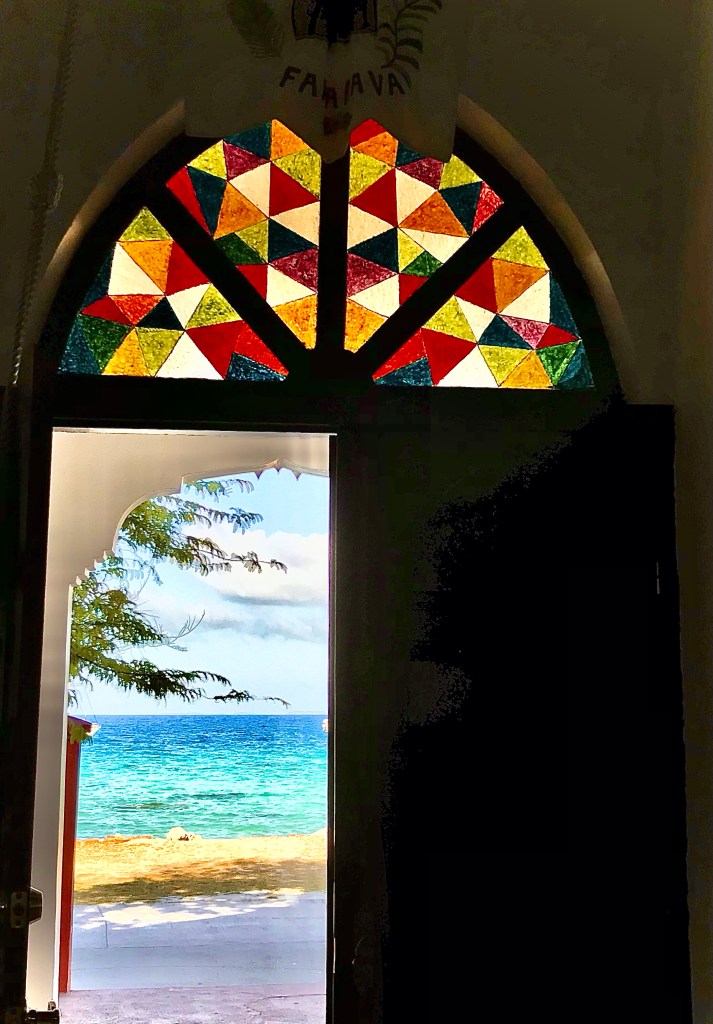
The small town of Vaitapu was lovely and the people was super friendly. The church is beautiful, it is all open. No doors. We had the chance to be around for the mass and when they were singing, the acoustic was very harmonious and lively.
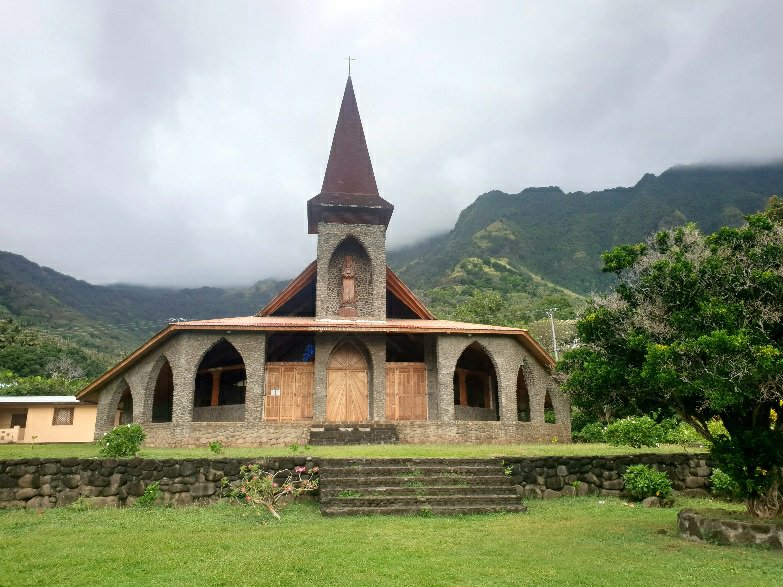
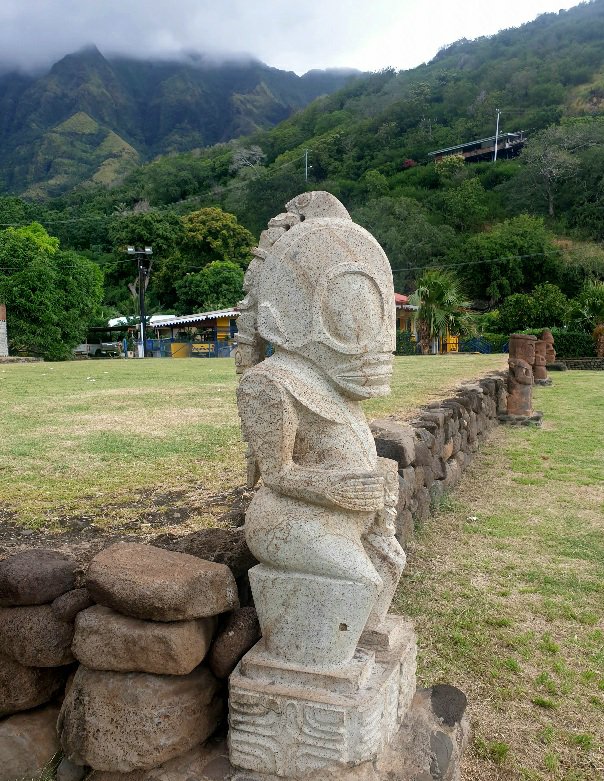
Next morning weather was still not good to go, so we went for a walk up the hill, from the top we could see Happy Days in the middle of the bay. The one and only. At this time of the year more boats would have been here but with all the restrictions it was almost impossible.
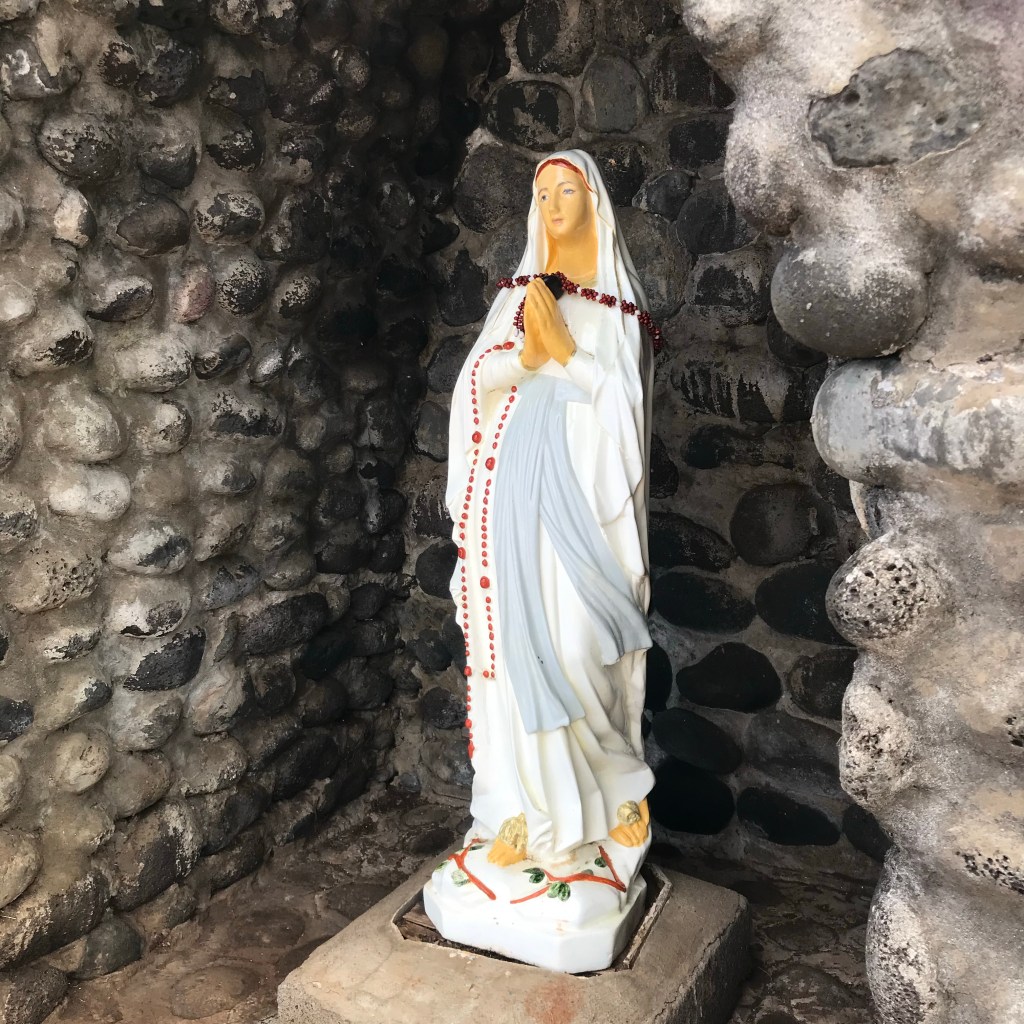
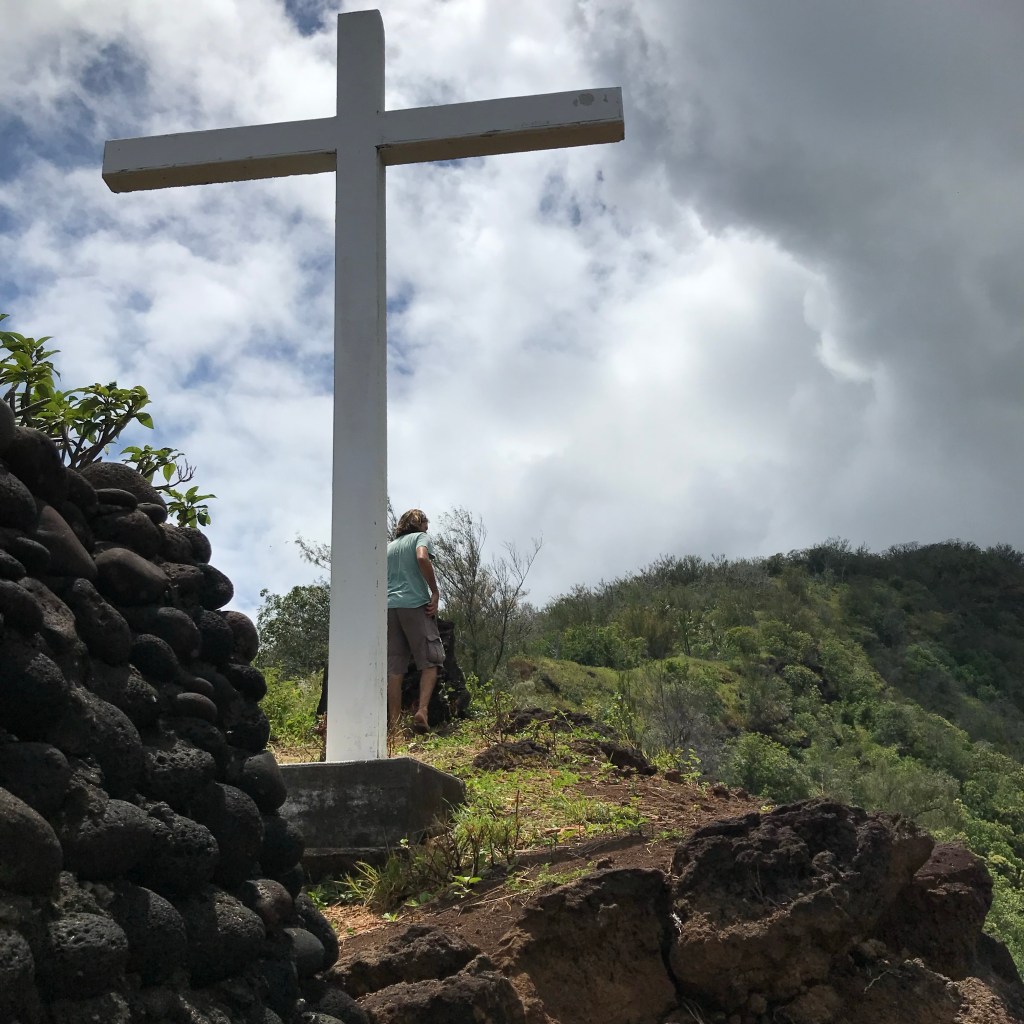
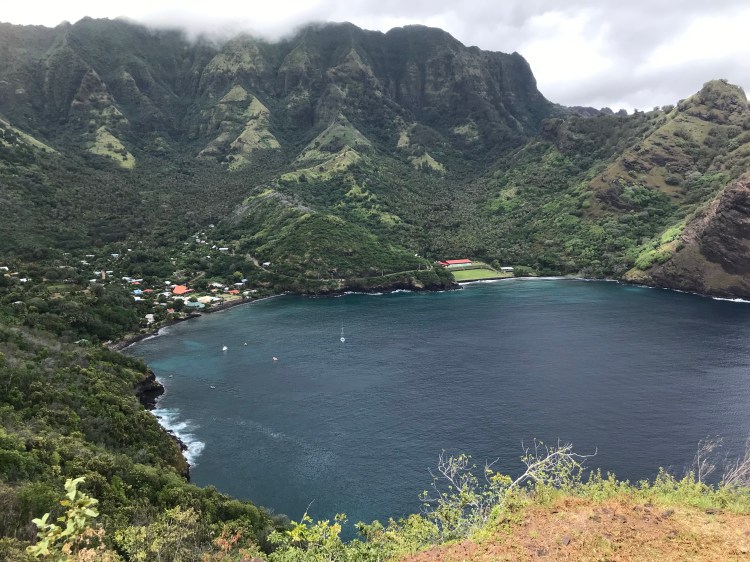
Still a bit of swell, so in the afternoon we went to Hanatefao, to see if the anchorage was a bit better for the night. That gave us a change to visit Hapatoni the next morning.
There is a 19th-century Royal Road, a raised, sort of paved walkway ordained by the queen and lined with ancient tamanu trees and fragrant with the scents of tiare and frangipani blossoms. The large Catholic church was built by order of the Vatican, and boasts stained glass windows and elaborate local carvings.
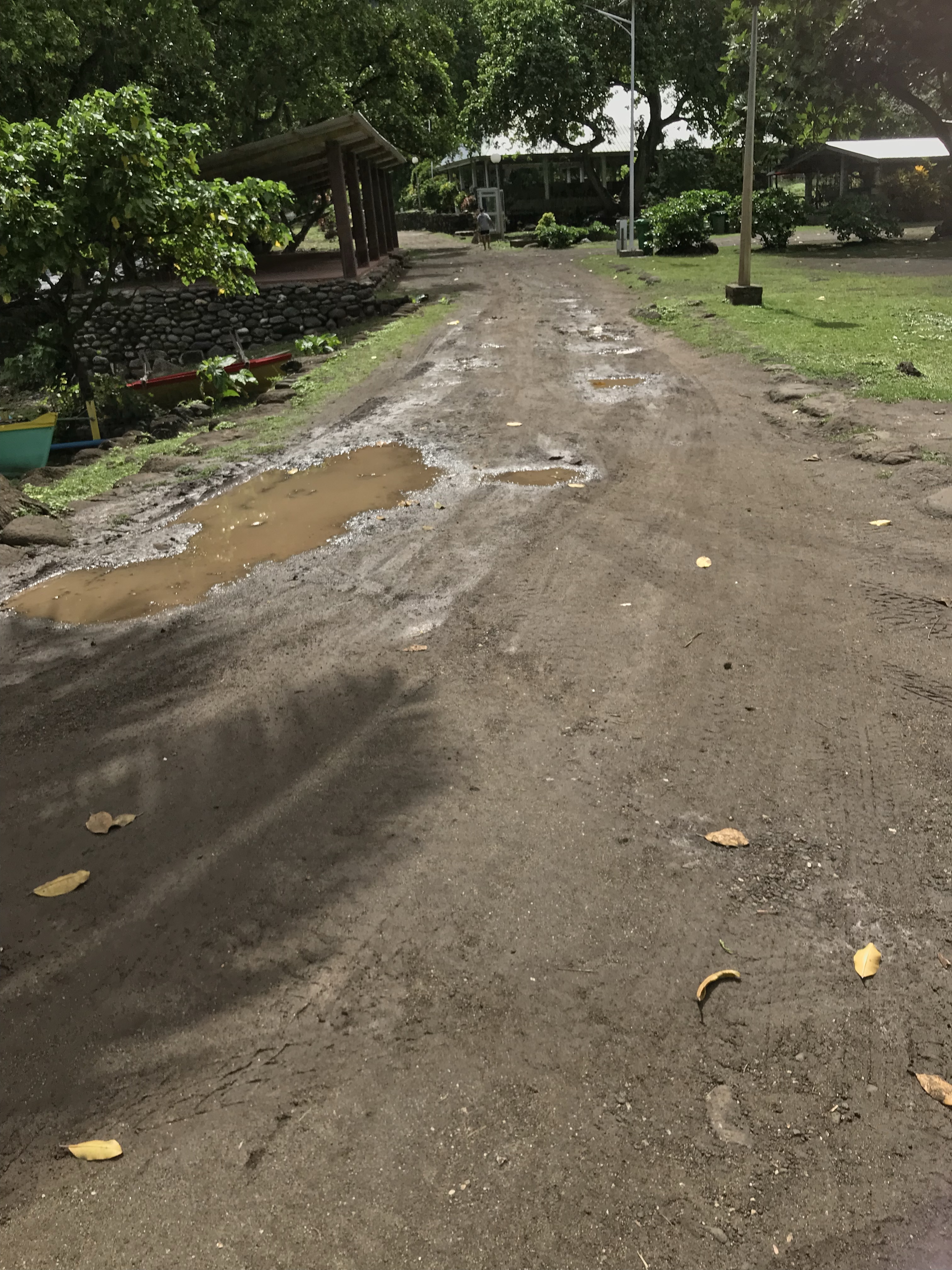
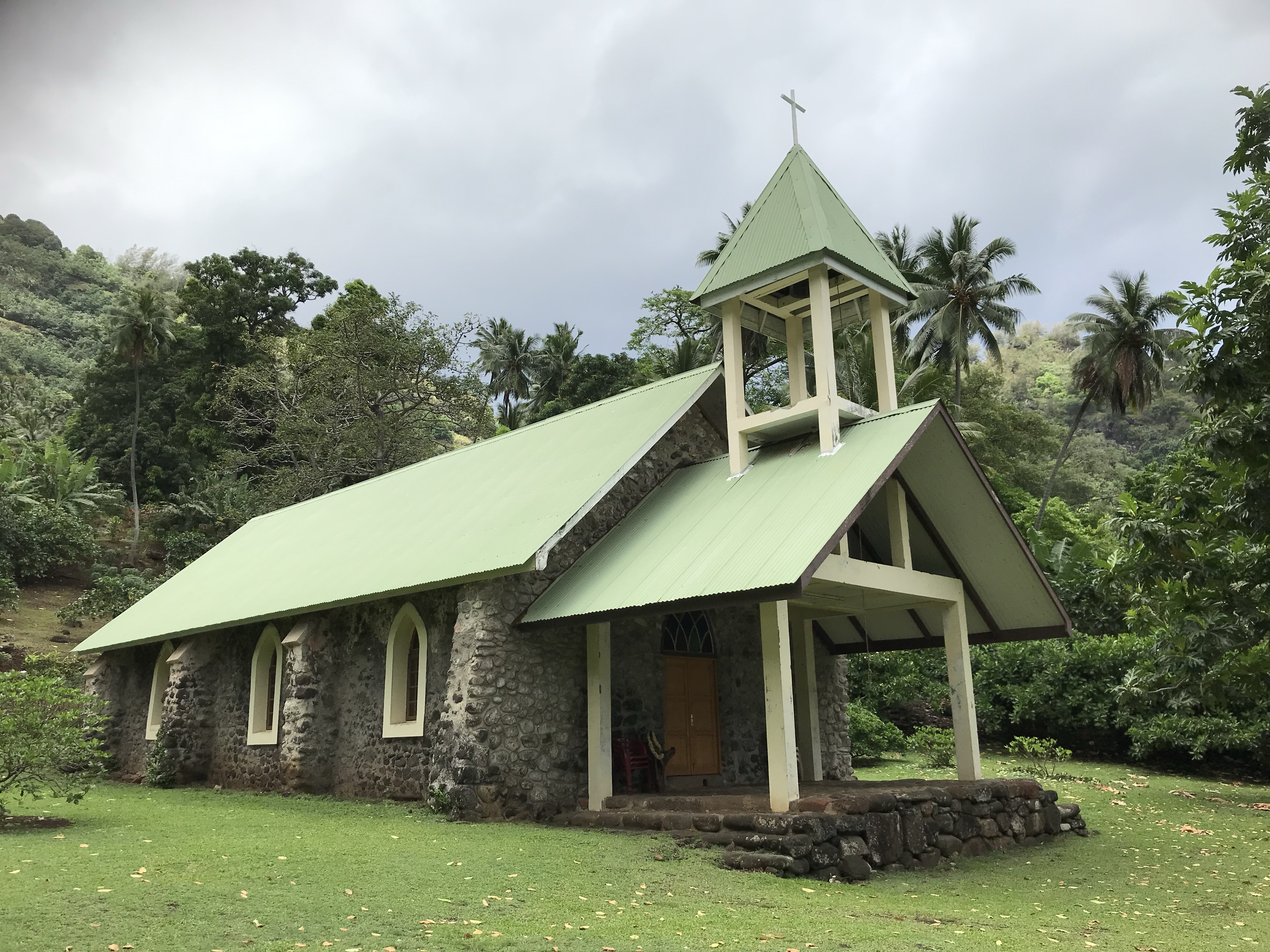
We didn’t see a lot of people, it look like almost like a deserted town. But we talked to one of the locals that was sweeping his entrance as they do all the time, and he told us, since the pandemic started they do not get visitors, only locals or people from neighbour islands. Before the pandemic started they used to get big cruise ships and had a market in place to sale their different crafts. Lots of sculptures made in bone.
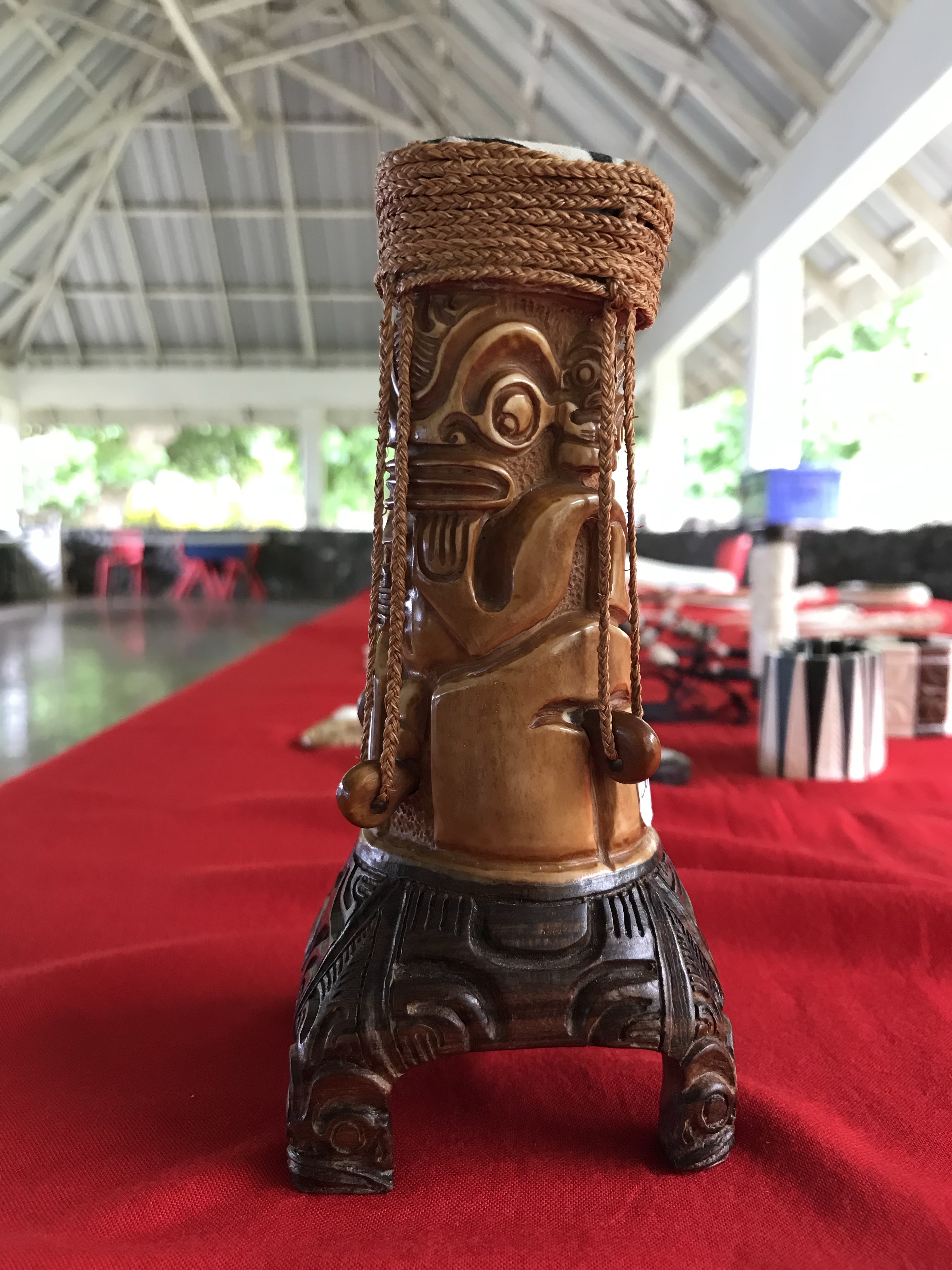

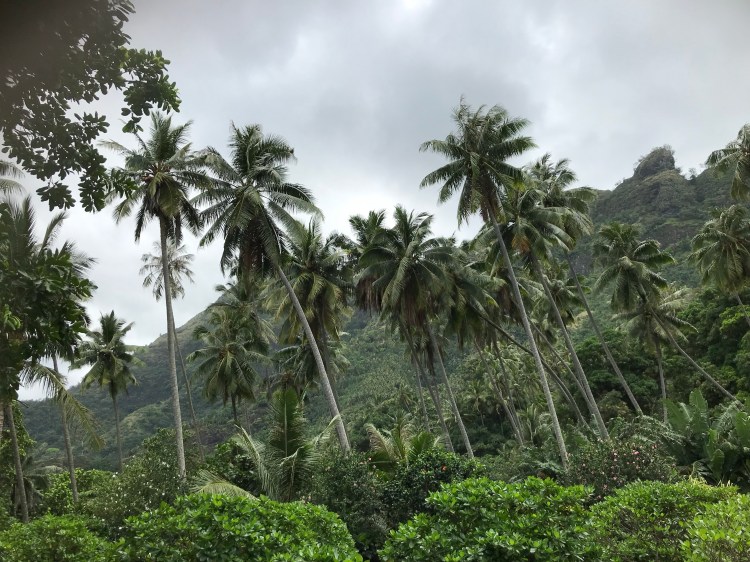
Good bye Marquesas, they are so remote that they remain mostly untouched by mass tourism. I think that’s a great part of its charm, this feeling of being in sync with nature. luxurious nature with lots of fruits trees to harvest in different seasons.
Sailing from Marquesas Islands to the Toamotu Archipelago
September 17 to September 21
It is about 550miles, to go from lush, high mountains green islands in the Marquises to the Toamotus which is the largest chain of atolls in the world. There are about 80 islands and atolls, but we didn’t have a lot of time. So we only stopped in Fakarava.
We left Hanatefaou at 4pm on Friday, September 17. Weather forecasts gave us a nice window for the following 4 days. The plan was to arrive in the morning of the September 21st to the north pass. It is always a bit tricky to calculate the arrival time, but the tide and wind predictions calculations gave us 11am, to have the best conditions to enter.
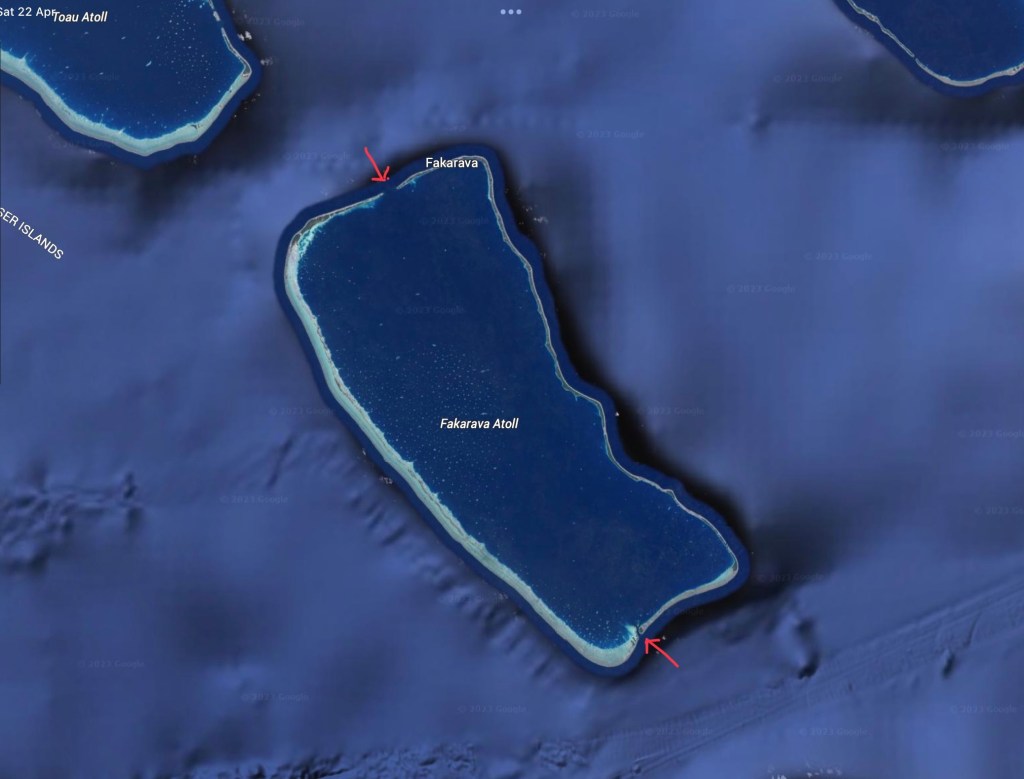
As you can see in the picture from google earth Fakarava has a huge lagoon. There are two passes one in the north which is wider, and one in the south a lot narrower. Both are very difficult or sometimes impossible to crossed if you are not at the right time for the tide.
We sail for the for days, at 7knots average during the day and getting the sails down a bit for the night. It was a nice an easy passage, luckily for me because the capitan got an stomach bug probably as we left, so I had to help a bit more than I normally do. But weather was nice and we were making miles.
We arrived about 4am close to the north passage and waited there until around 7am. At that time the capitan’s decision was, “no need to wait more we are trying the pass now”. The pass is about 1600m wide, so you would think there is no problem to go at any time, but if you make the calculations the lagoon has 1112 square kilometeres of surface, multiply by the depth of the lagoon that is a lot of water coming out thru that small pass. Which creates a lot of current, if I remember correctly we had 6knots of current against.
I was in the cockpick while Cedric was helming, this was no job for Rafa. The day look fantastic, good visibility and as we start moving into the lagoon the waves started to be higher, there is more turbulence, I am all happy taking a video when I heard a strong voice “sit”. That was when I realised, it wasn’t all as “easy as it looked”. Happy Days was going full powered against the current, up and down the waves and still at some point we were almost static. If we couldn’t pass the strongest point, we would have had to go backwards and keep waiting. But little by little we were wining and few minutes later we were inside the lagoon. Completely, flat and peaceful.
I could understand how this could be very dangerous if you try to go at the wrong time, the current and if there is wind against, the whole waves crashing could just flip a boat.
It was a dry season, and the weather was fantastic on our arrival, sunny, clear skies steady breeze. Great time for some sightseeing.
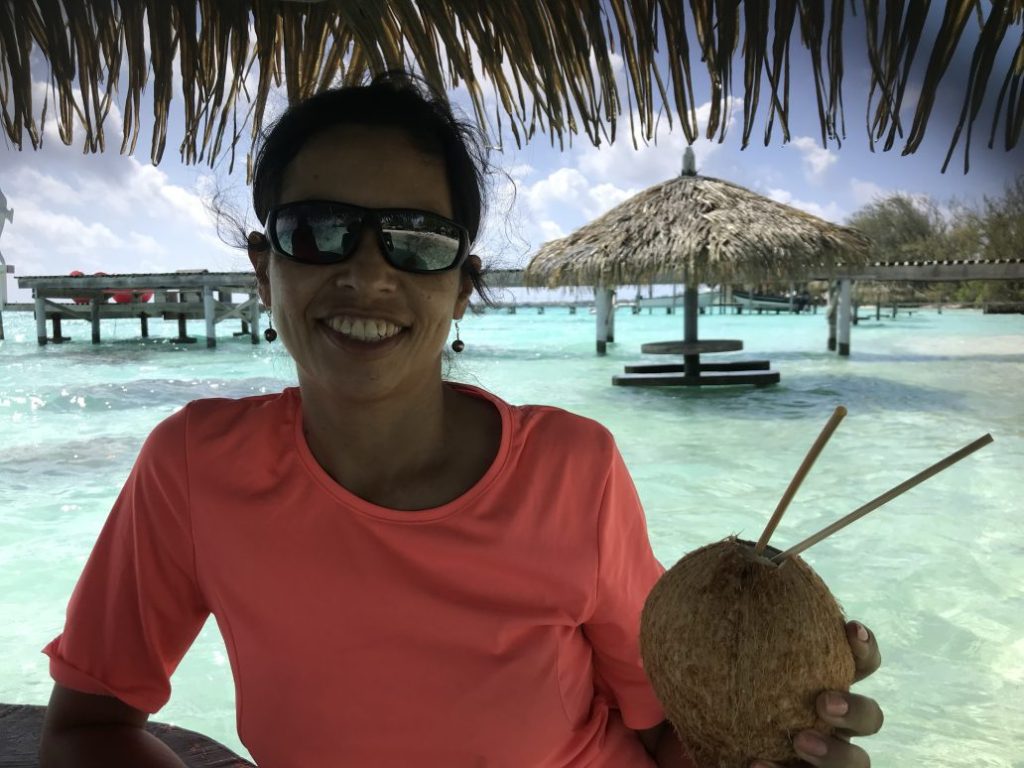
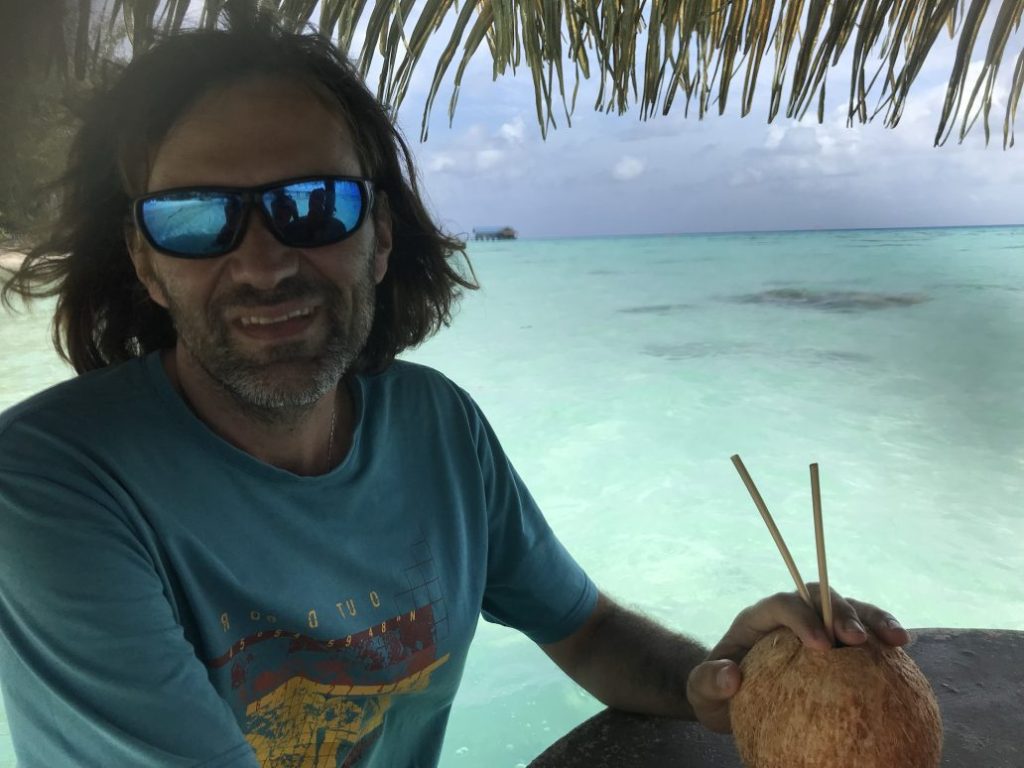
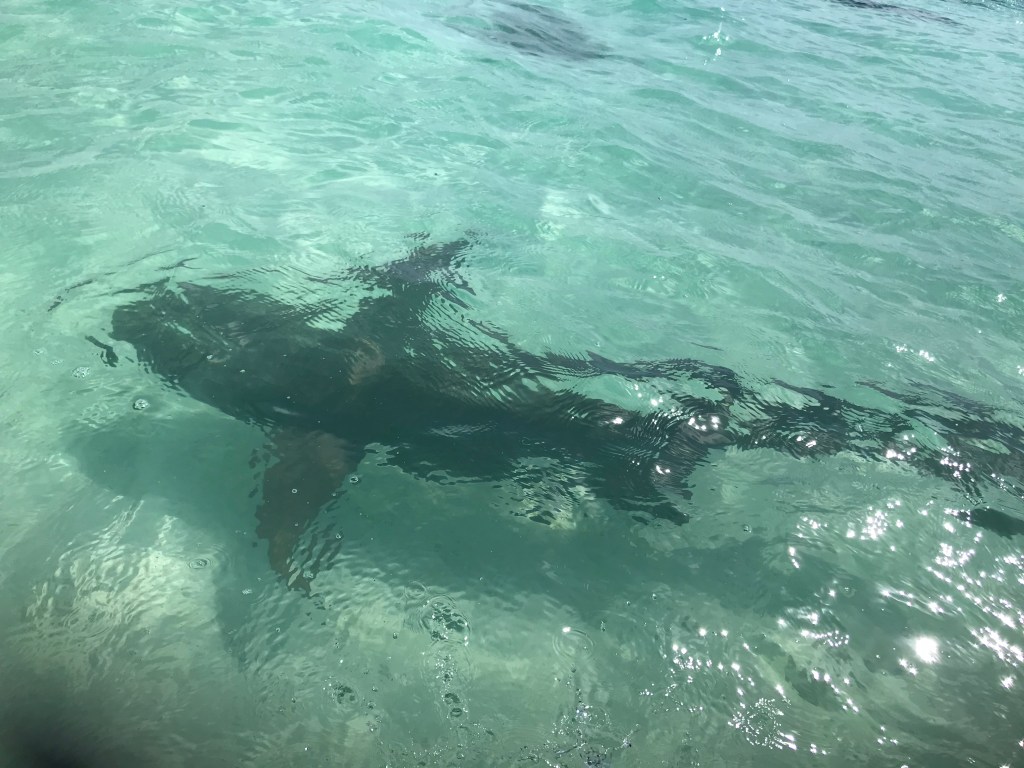
Our first stop was in a very special restaurant. The tables are half in the water, and sharks come to welcome you while you sip your cocktail, serve in a coconut. They are very friendly.
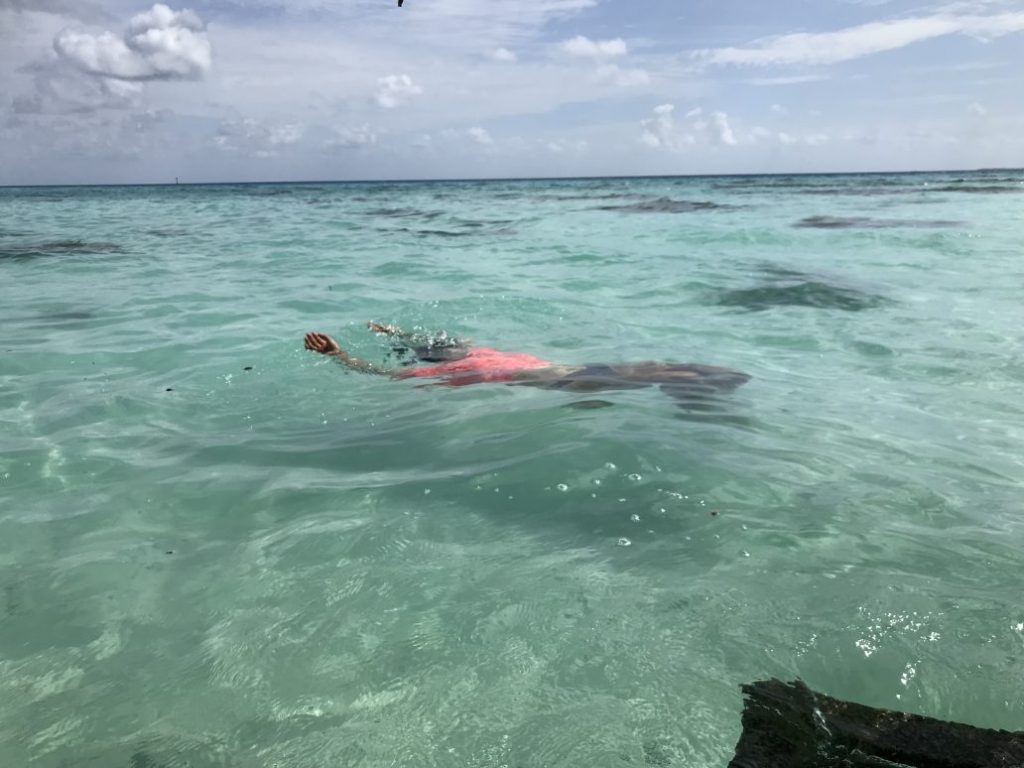
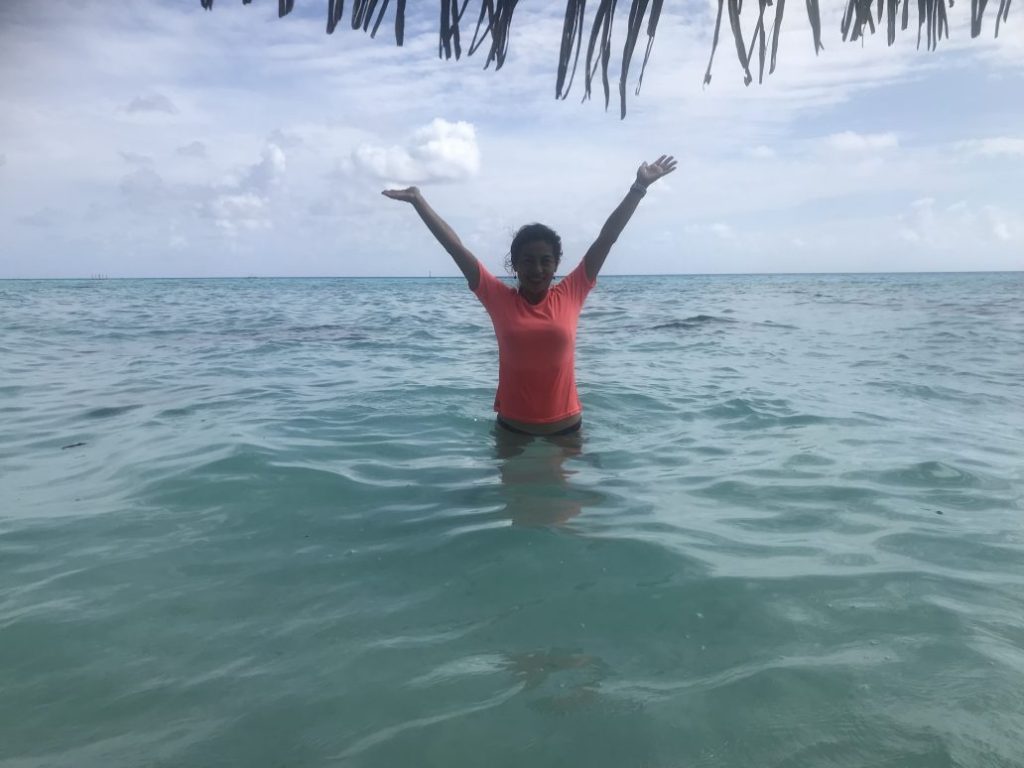
We also visited Rotoava, the busiest town in the Toamotus with about 800 people, so you can imagine how small are all the other towns. Although, very very remote, there is a nice shop ran by a family that would cater for all sailors needs. They have internet, they will receive your packages, help with laundry and happy to chat and give you all the advice for the things to do in Fakarava.
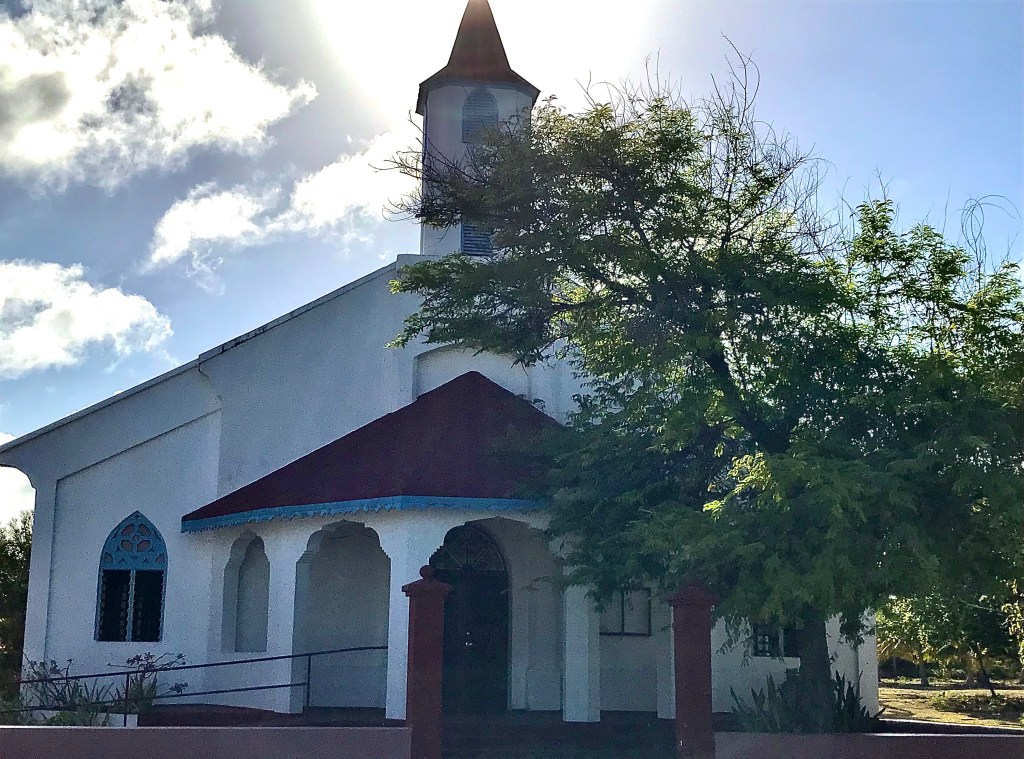
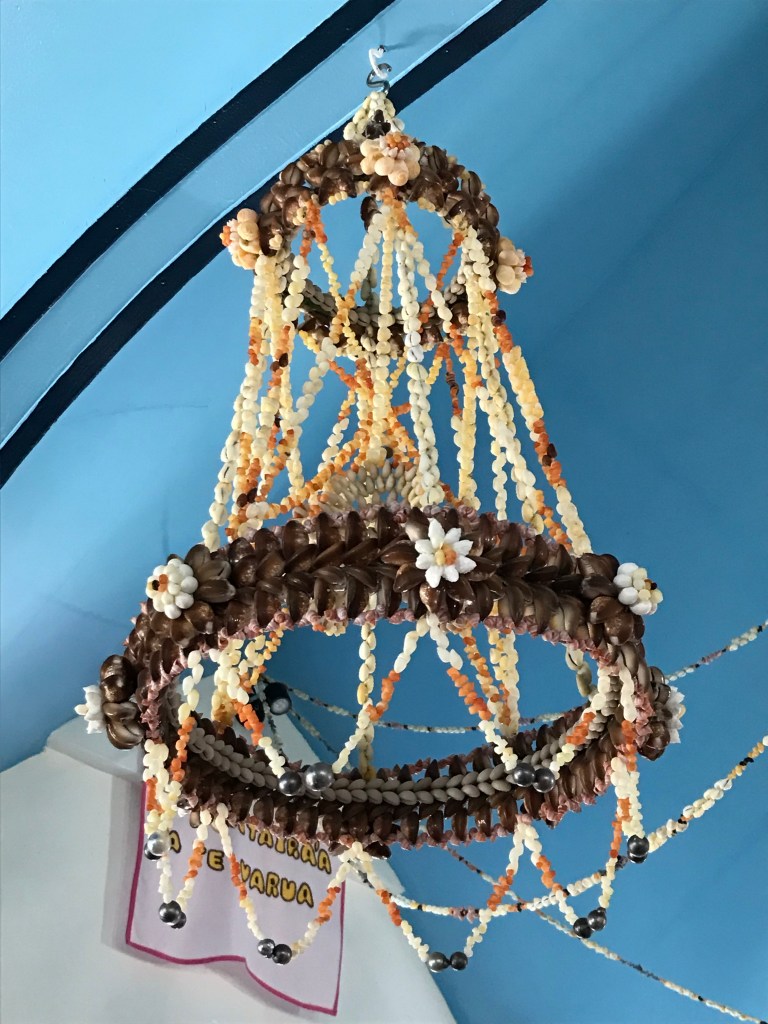
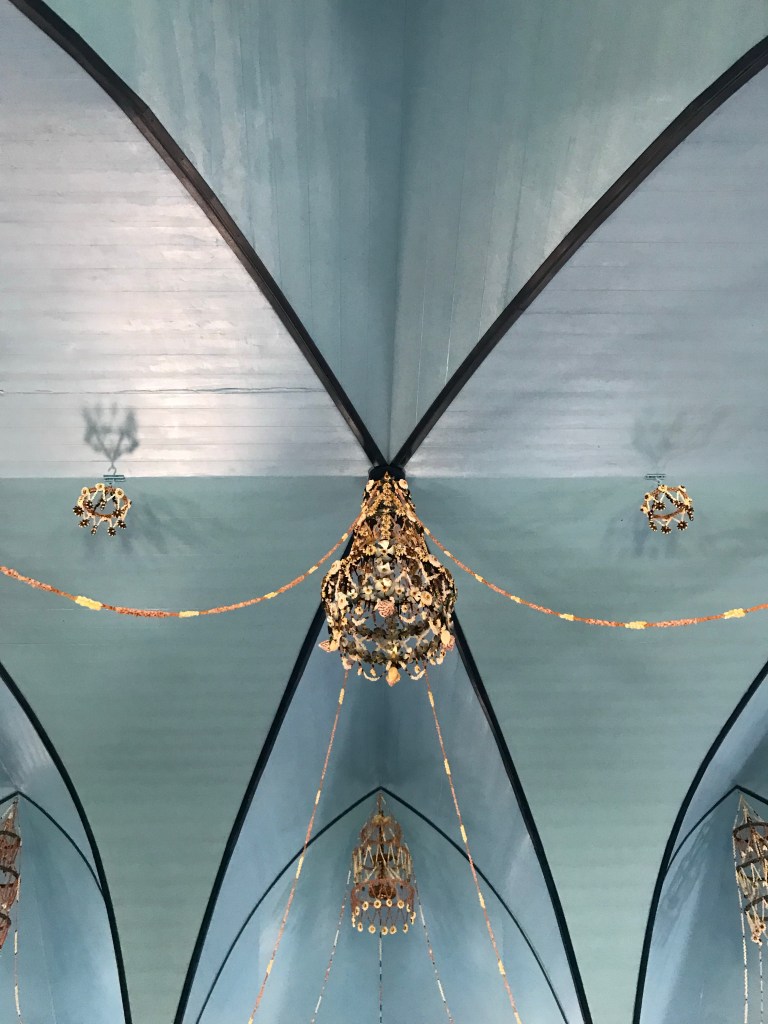
The main church on town is so particular because is not only decorated by thousands of shells but also it was built with coral.
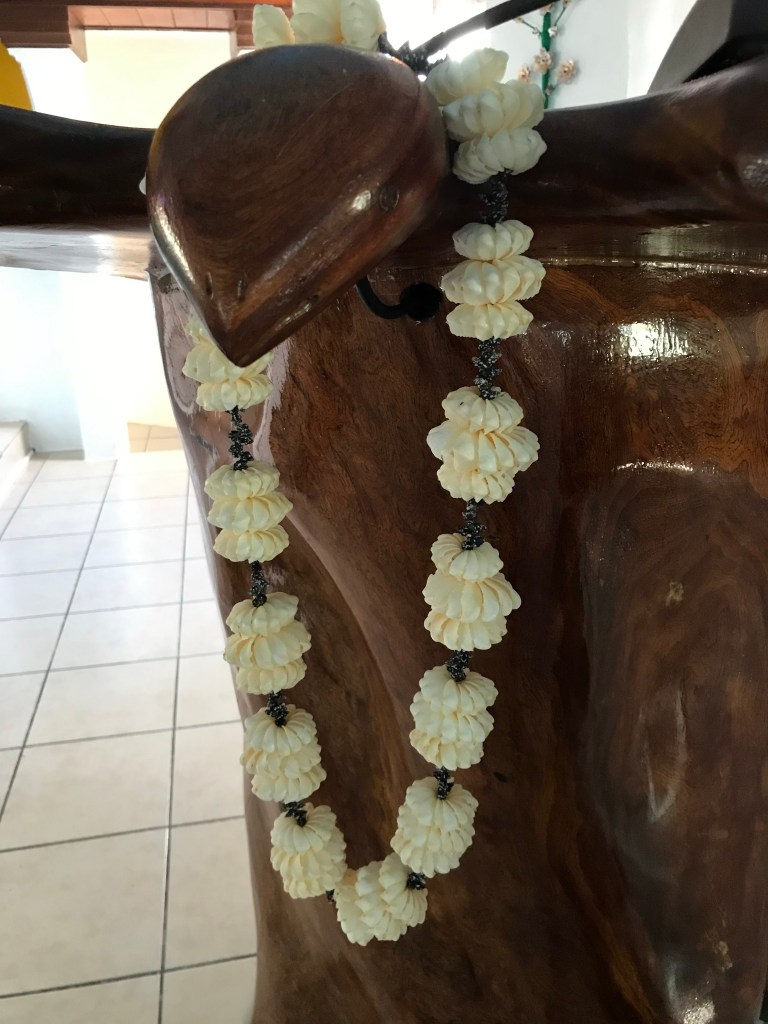
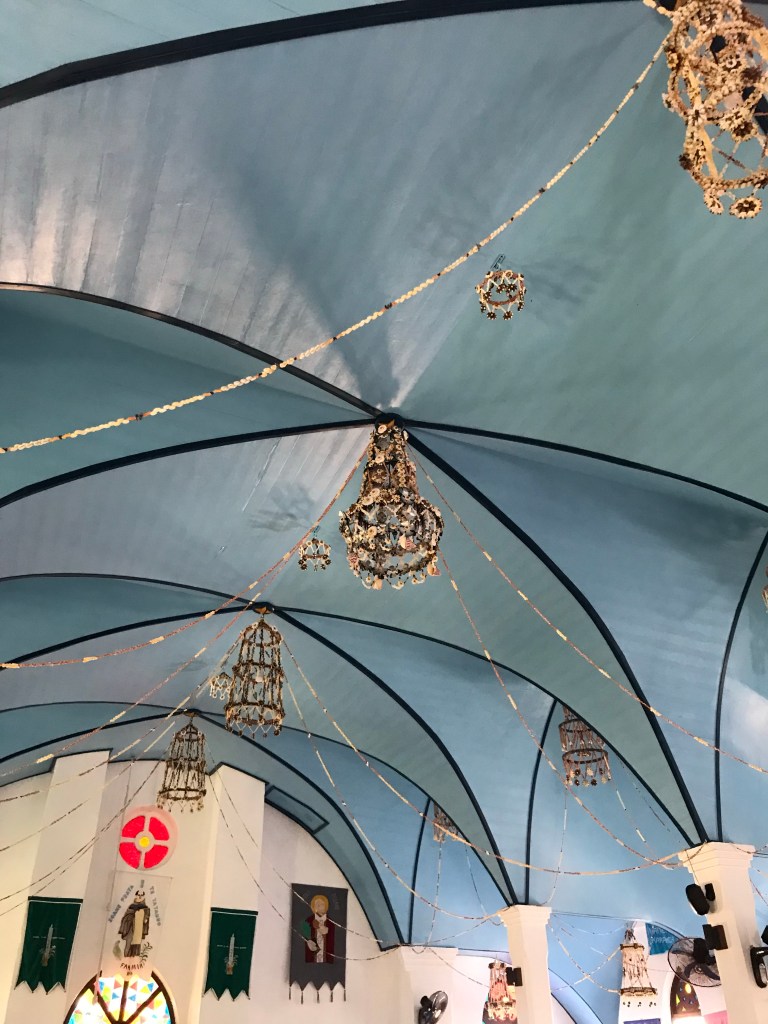
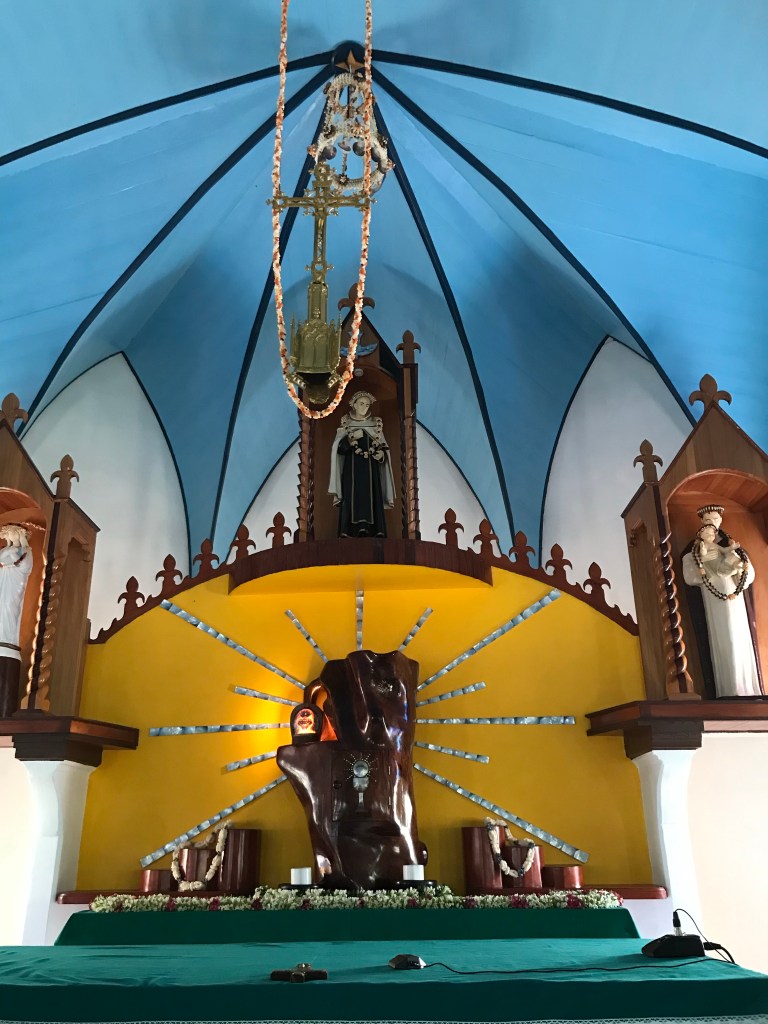
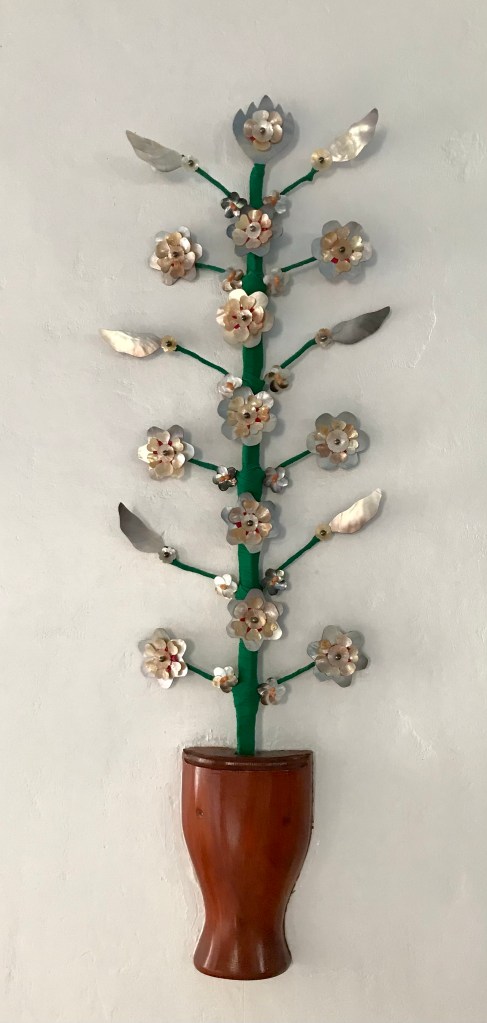
Then we went to the south in front of Hirifa. Our friends from SV Nudi were in Rotoava getting some supplies and we timed it perfectly so we could sail together all the way through the lagoon until Hirifa. It is alwyas so difficult to take photos of the boat with full sails up, but thanks to them we got some really good shoots.
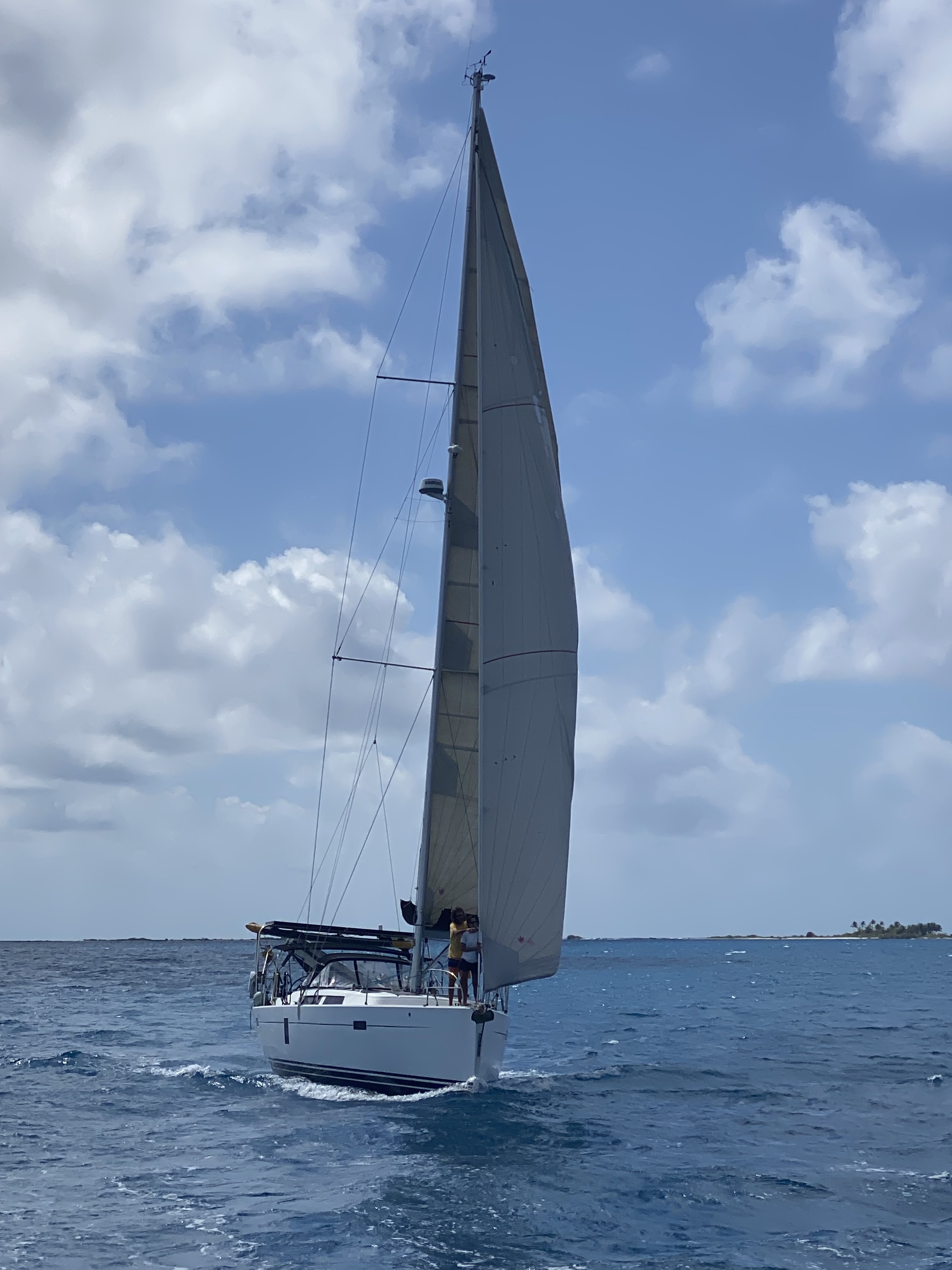
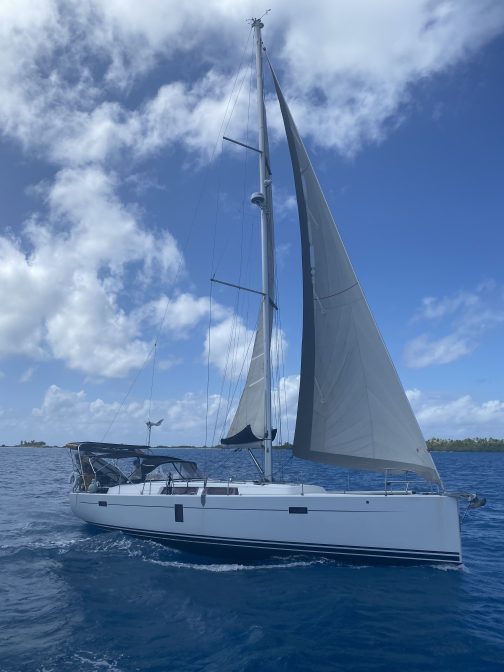
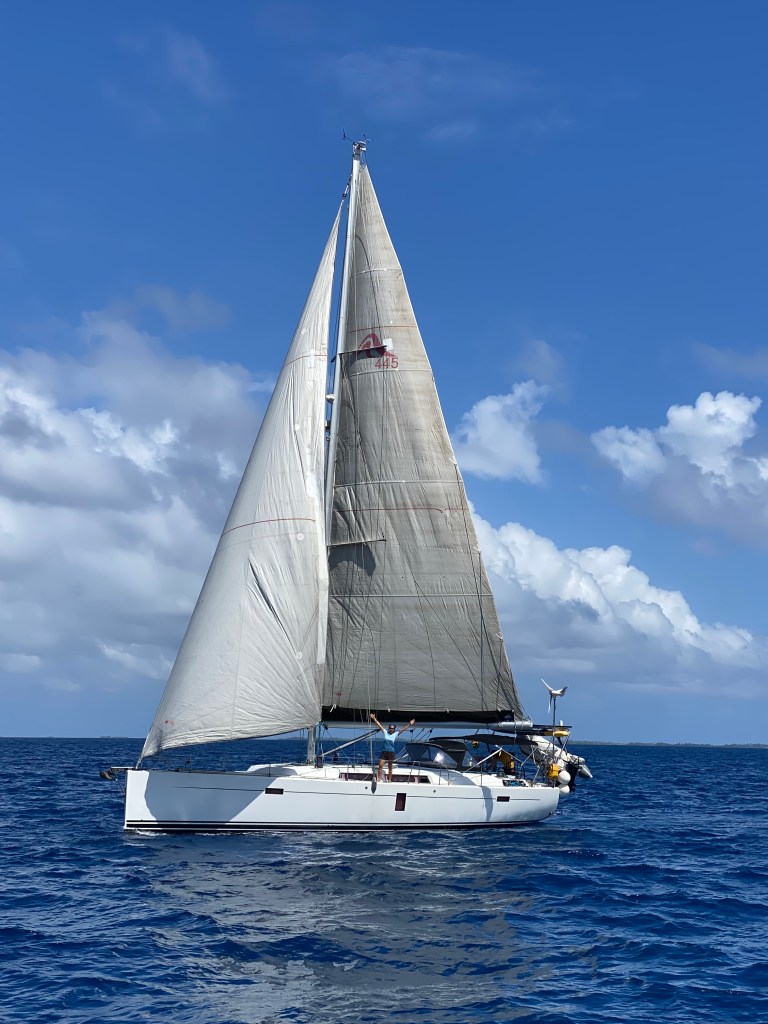
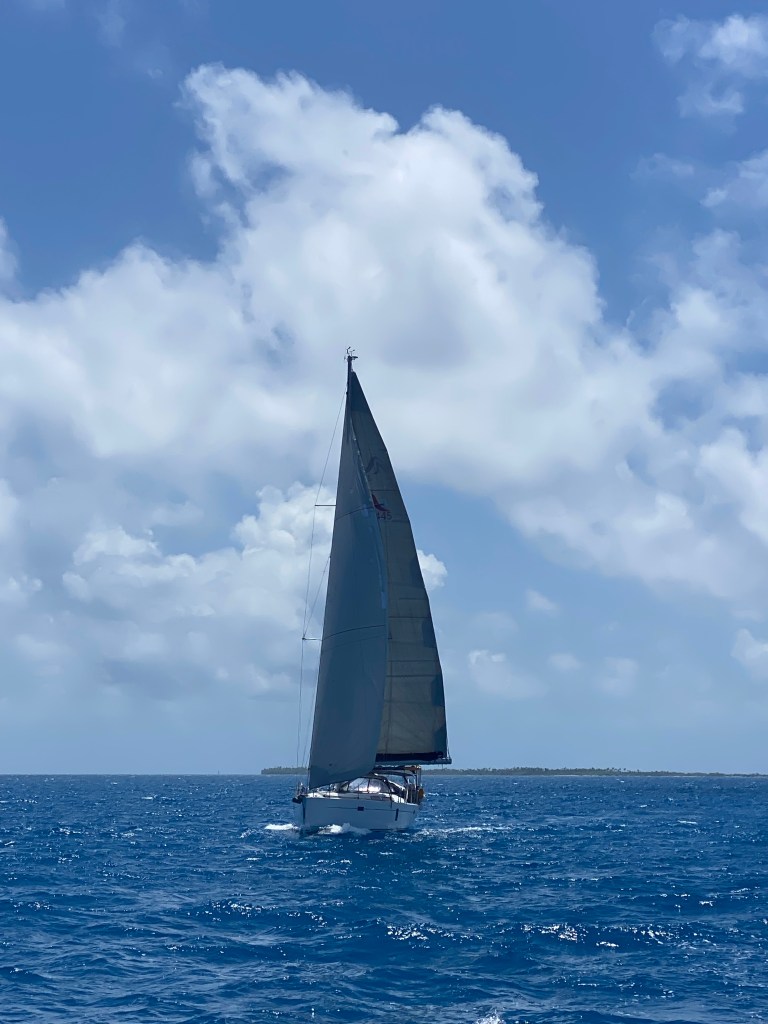
There were a few boats anchored so plenty of people to shared all the lemons and pomelos we collected from marquises. We also shared with the locals, who were very happy to receive fresh fruits. Tuamotus are very arid, difficult to grow anything
The next couple of days the weather really killed our intentions to do anything. Although we were in dry season there was a front of wind with lots of rain that disturbed the peace of the lagoon. We had been told so many times that once we left Marquises and gone to Toamotus we could forget about rolly anchorages, but it was completely the opposite. The boat was rocking all day. It took me 20min to go on my paddle-board to visit our friends on the boat anchored only 200m away. So much wind, waves, quite a workout. In afternoons it would clear up a bit, so we could go onshore for a nice walk. Sunsets are pretty special from Hirifa.
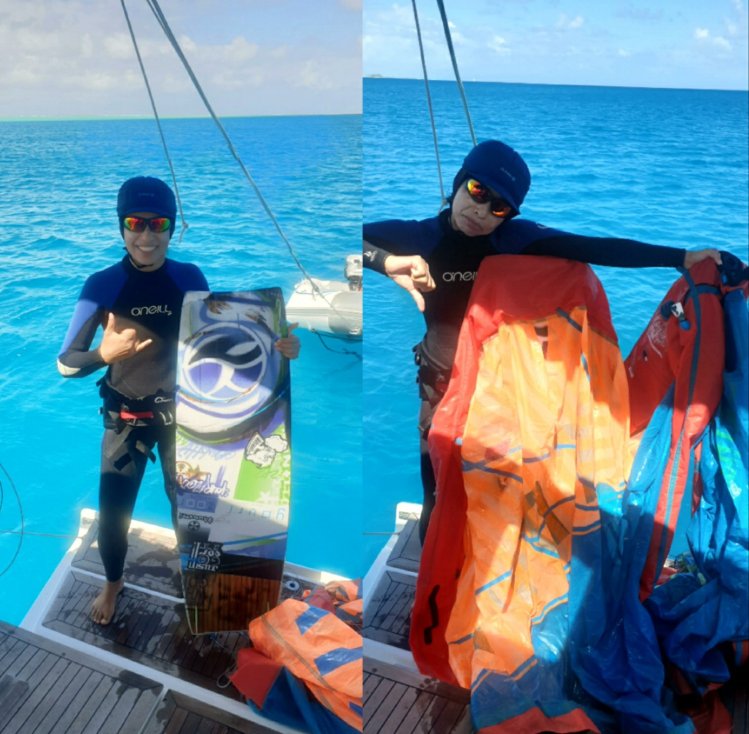
Finally, a couple of days later, and the weather came back to “normal”. So what can you do on flat water and perfect constant wind? Yes, you guess right. Kitesurfing!
Cedric has progressed enough to go on his own, and I have progressed as well on my driving kills with Hasty (our 9.8 Tohathsu engine). So we did a few sessions were he would go kitting and I was doing the safety.
I also tried some classes with the instructor in Hirifa. Unfortunately, it didn’t go that well. He had a group of people that was staying in a Megayatch, and of course they took priority. At some point, he left me drifting on my own for 15 to 20min, which to me felt like and eternity. Then he came and pick me up, I don’t think he realised I was having trouble he had gone far away with the other two. With that wind you drift fast. There was no really a big danger, you still inside the lagoon. We couldn’t stay for a lot more time in Fakarava, we had to keep going… Australia still far away.
We kept doing some kittesurfing with Cedric, either me doing safety for him or he following me, until all our kites started to give away and broke. We fixed them and Cedric did a couple more runs. It is true that with that weather it is a Kite paradise.
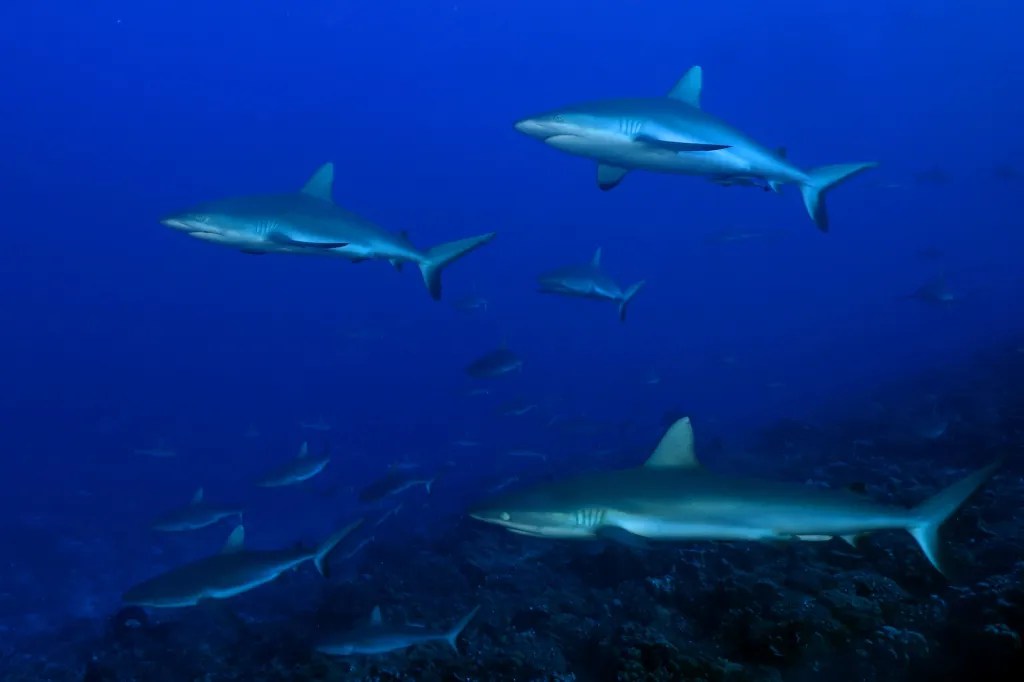
Fakarava, did not disappoint at all. After so many stories about sharks, we did the dive of the south pass. Tumakohua Pass. The plankton growing inside the lagoon escapes by these natural gate through the reef and attracts pelagic species in numbers. These passes both North and South have abundant shark populations. Due to the exceptional ecosystem, Fakarava Atoll is registered as UNESCO biosphere reserve.
We did two drift dives at the time the current was coming in, about 2 or 3knots of current. And you fly thru a channel with a wall of sharks on each side, it is quite impressive, anywhere you look around there is a shark. (this is not my picture, but you get an idea)
By Friday October 1st a good weather window open for us. So we pick up the anchored and left from Fakarava. This time we took the south pass. Which is not that wide and at some point is only 3m deep. We left at the appropriate tide and the channel is very well mark. That doesn’t take all my stress out though. The water is so clear that I could see the coral so vividly that it looks we are going to touch at any time. But we didn’t only 2 knots of current against and 15knots of wind side ways took us out of the lagoon very quiclky. Just outside the sea was very messy waves crashing against for about one hour until we started pointing south. South we go, direction Raiatea 350nm away.
Still 88 days to get to Australia. We will keep you posted.
 Happy Days