July 28th, 2021
When you think 22 days at sea is the biggest, toughest crossing you have made in your life, think twice because maybe there are rougher passages even if they are shorter. I learned this the hard way!
We left Gambier on July 6 at 9:20 in the morning. Sailing by the west with 15knots of wind and 80 deg direction. The forecast predicted 15 to 20 knots for the journey between Rikitea, Gambier to Fatu Hiva in Marquesas. 800nm distance that took us only 5 days of navigation. It was a fast passage. We were in Rikitea and the weather kept changing, moving the good weather window further and further away. At some point I though we were going to be able to stay until July 9. That date was the Heiva in Rikitea and since I had been part of the dance group for the last month, I was keen to stay and dance on that day. Apparently, on that they the dance group goes around town and dance all day offering gifts and receiving gifts it is just part of the bigger festivities on that time. However, the capitan confirmed the good weather window was approaching and we left before the party started.
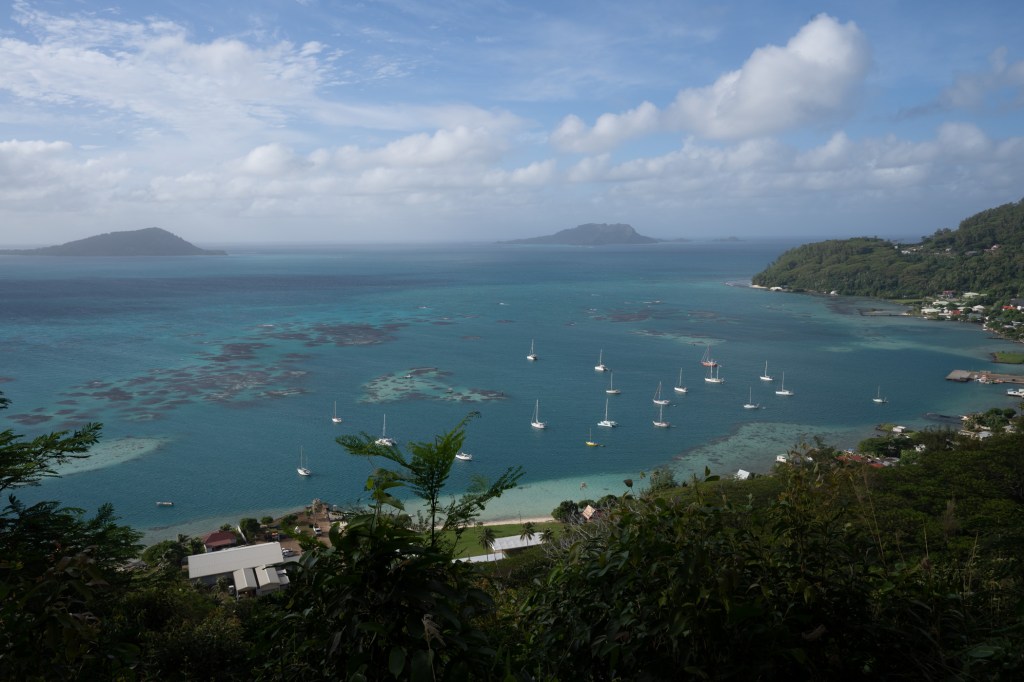
Thank you Gambier, we spend a full two months and it was wonderful. Between hiking, snorkeling, sailing, dancing and more, time just went by so quickly. We even attended a party, a full party. Because of the pandemic, everywhere we had visited had restrictions all the way since we started the trip, this was our first party and it was great fun. Everyone was asked to bring music from its home country or region for the french, so I had a chance to play a bit of salsa and had everyone dancing. Salsa dancing in Gambier, not an everyday activity for sure, but it was nice!
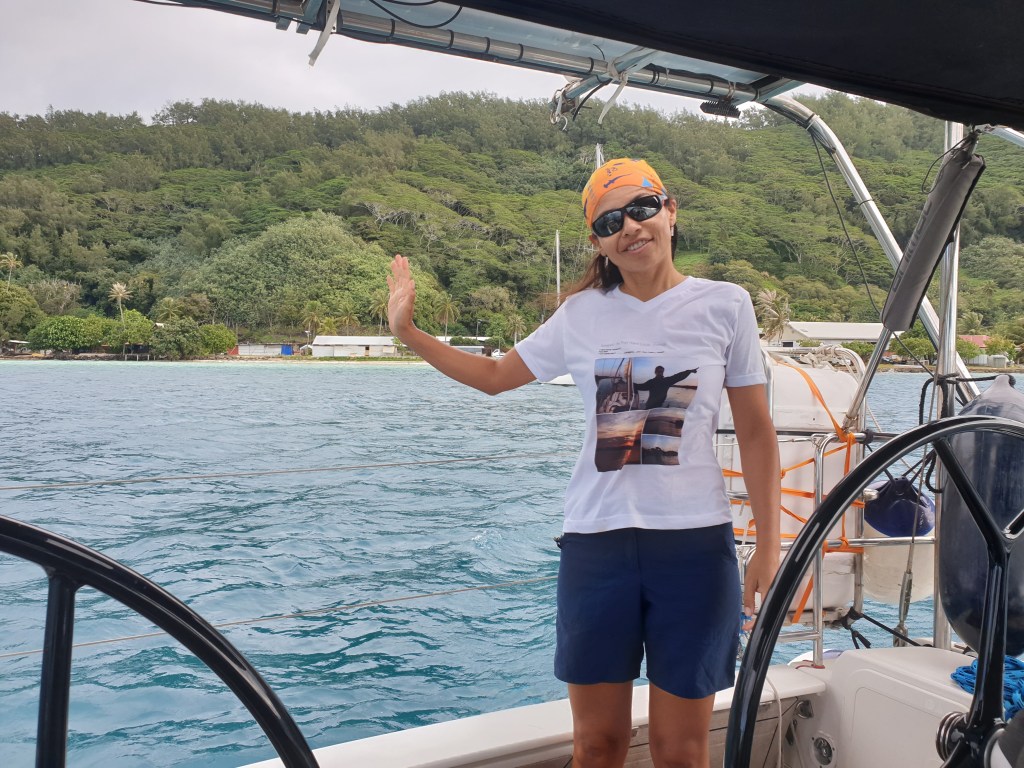
It was time to go and we had no time to stop in the atolls in between. We had to leave straight to Marquises otherwise we would have no time to visit, before leaving Happy Days in Hiva Oa and returning to Australia.
There was just a handful of boats in the anchorage when we left. Winter was already arriving and Gambier is still south so nights were getting cold and colder. It really isn’t that cold but still, it is easy to get use to nice warm weather.
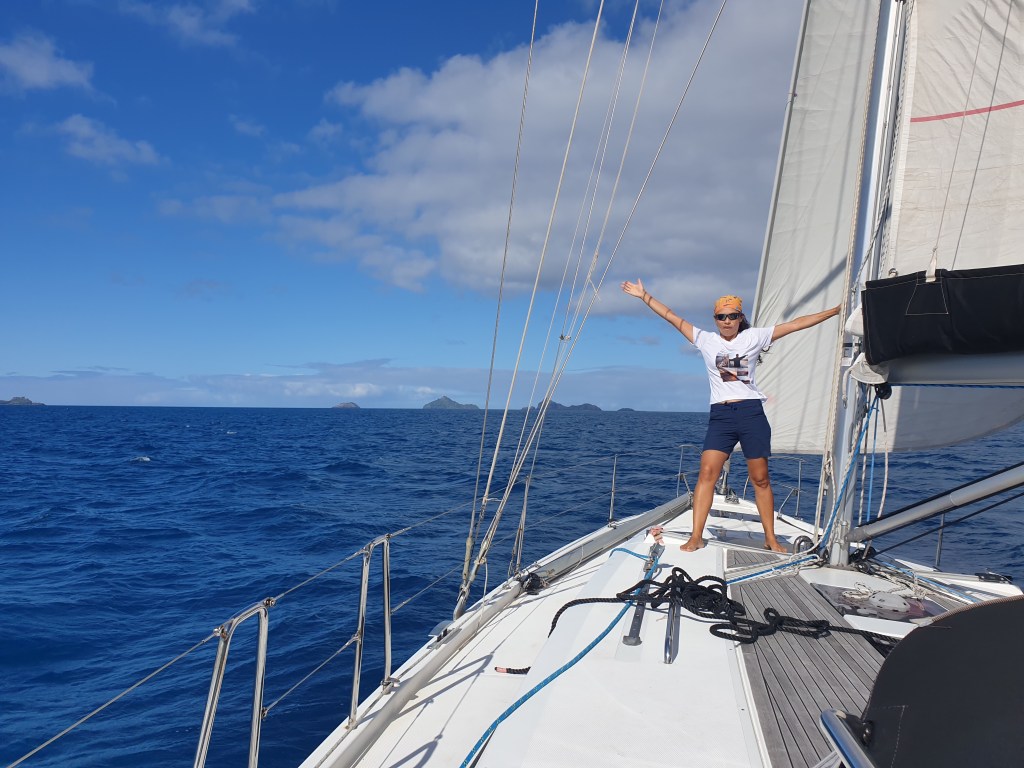
We raised up the sails and left slowly throughout the channel. Just looking at the coast. We could see exactly the path we had hike the day before, same place different perspective. We did hike ¨the 13 apostles” track the day before and as we were leaving we could see the track.
The 13 apóstoles walk
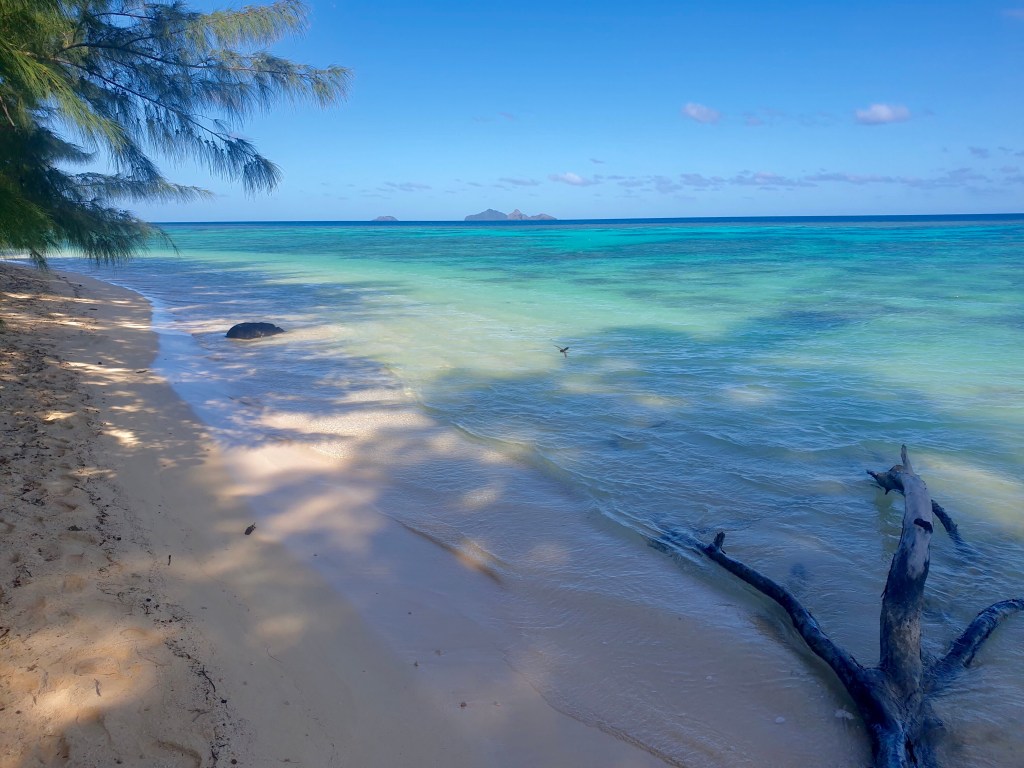
From here we saw the channel we took we the boat the following day.
It didn’t take us long to be out to the lagoon. As soon as we were out, our protection was gone. The previous days the wind had been strong so big waves had formed already. As usual the first day is a bit harder and with the seas already high it was even more challenging. Its good we always have couple of meals prepared for the first 24, 48 hrs to make it easier on us.
We had 800nm from Rikitea to Fatu Hiva and it was a hard crossing. On the first day the seas were messy, waves crashing in different direction and 15knots of wind that looked like a lot more. On the second night the wind die for a couple of hours but then it started raining on and off all night. Day 3, the wind was back and we kept sailing with 2 reefs and the gib, but this time the gib broke at the bottom so we couldn’t rolled it out completely.
On Day 4 things got more difficult, the wind change direction and got stronger around the 20knots. Going against the wind is harder, the sound of the waves crashing and the boat moving up and down the waves feels a lot more rough. It also puts more stress on the boat and push the limits. The result was a broken Bimini. It was only a small piece that broke. But we had to close it off and had no more shade for the rest of the crossing and probably a lot longer until we can find the replacement piece.
Day 5 also brought its own spice. When the night was falling the rain started. But this time it was heavy rain with 30knots winds. I saw a 34knots on the screen and I didn’t want to look anymore. Happy Days was perfect sailing at 8knots in the rain.
Wind and rain kept coming until the next morning. So from 1am on Day 6 we were sailing with no main sail and only a small gib and still we were doing 5 to 6knots of speed. At 7am we finally arrived in the bay of Omoa in Fatu Hiva, Marqueses Islands. I thought great. We have arrived but I was wrong. You’ll understand why below.
After days of navigation and knowing that there is nothing around only sea when you arrive in a bay like Omoa is just breathtaking, it is hard to explain but you smell land. The mountains are about 1000mts high. Photos don’t capture the full immensity of the environment but they can give you and idea.
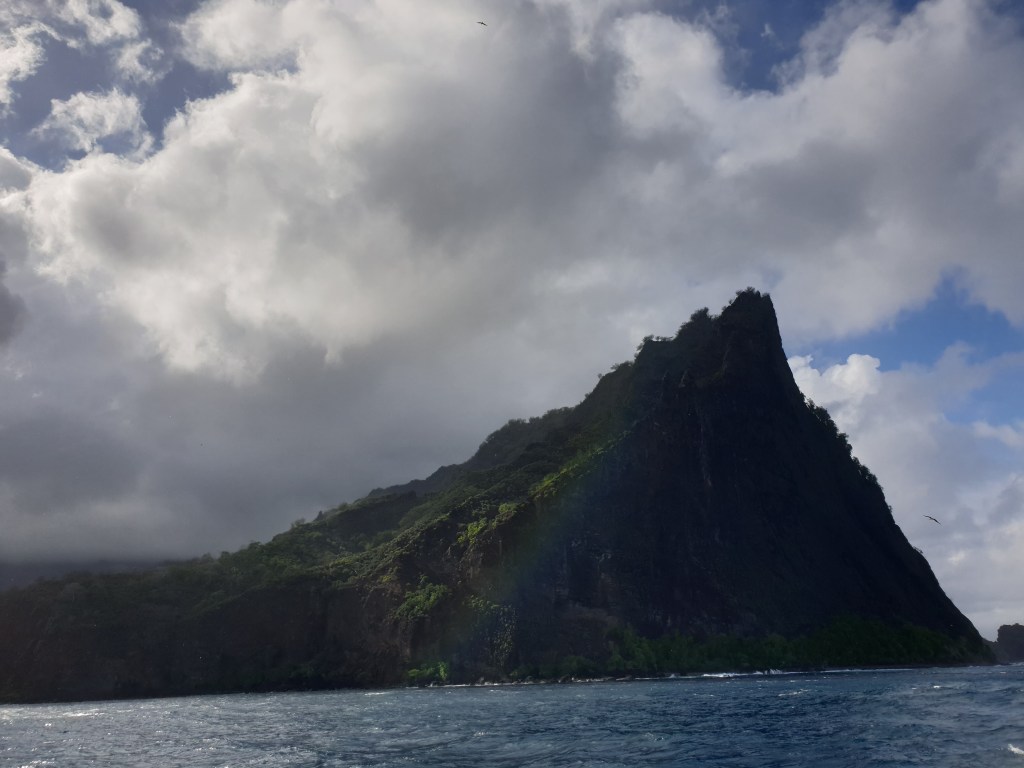
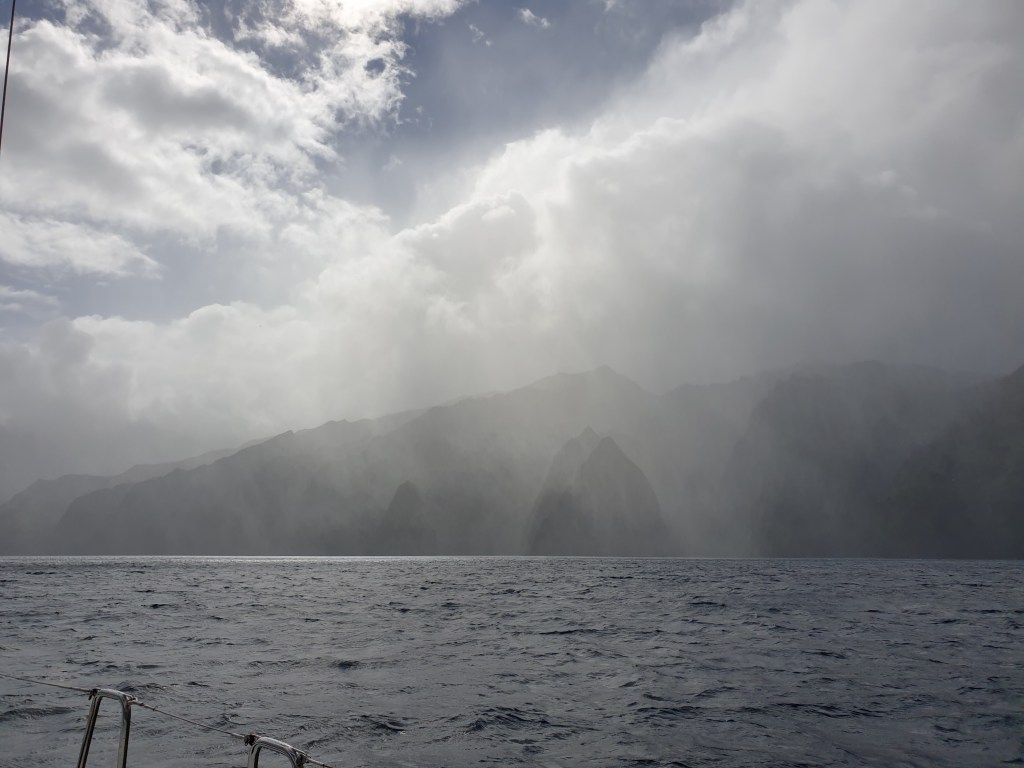
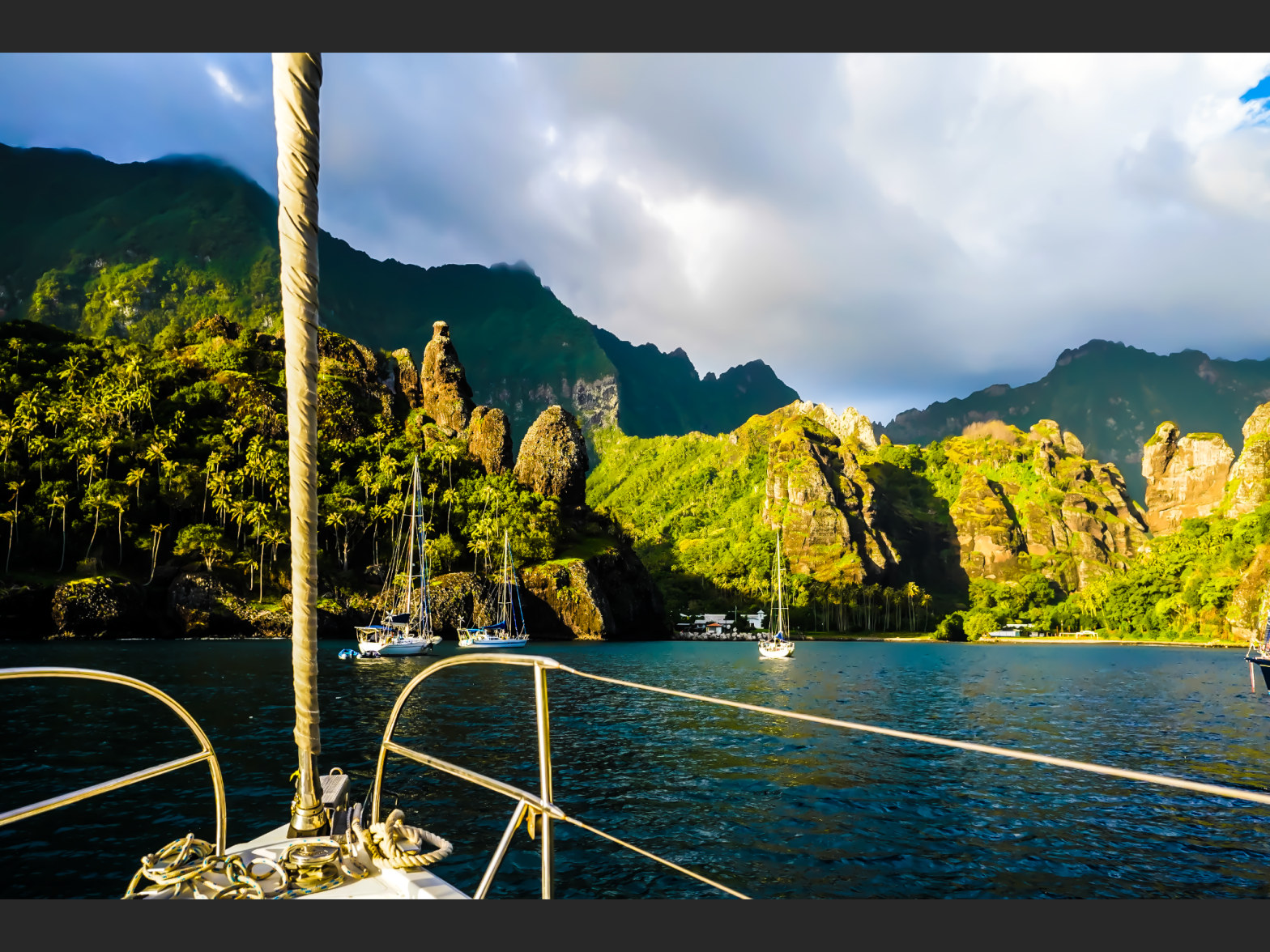
We were planning to stay in Omoa but the swell was entering the bay. There was only one boat anchored there and we could see its mast balancing from one side to the other, so we turned around and decided to go to the next bay. Which now days is called ¨The bay of virgins¨. It is a famous bay with lost of history and you will find it in any guide book that talks about Marquesas. It is enclosed with high mountains and rocks.
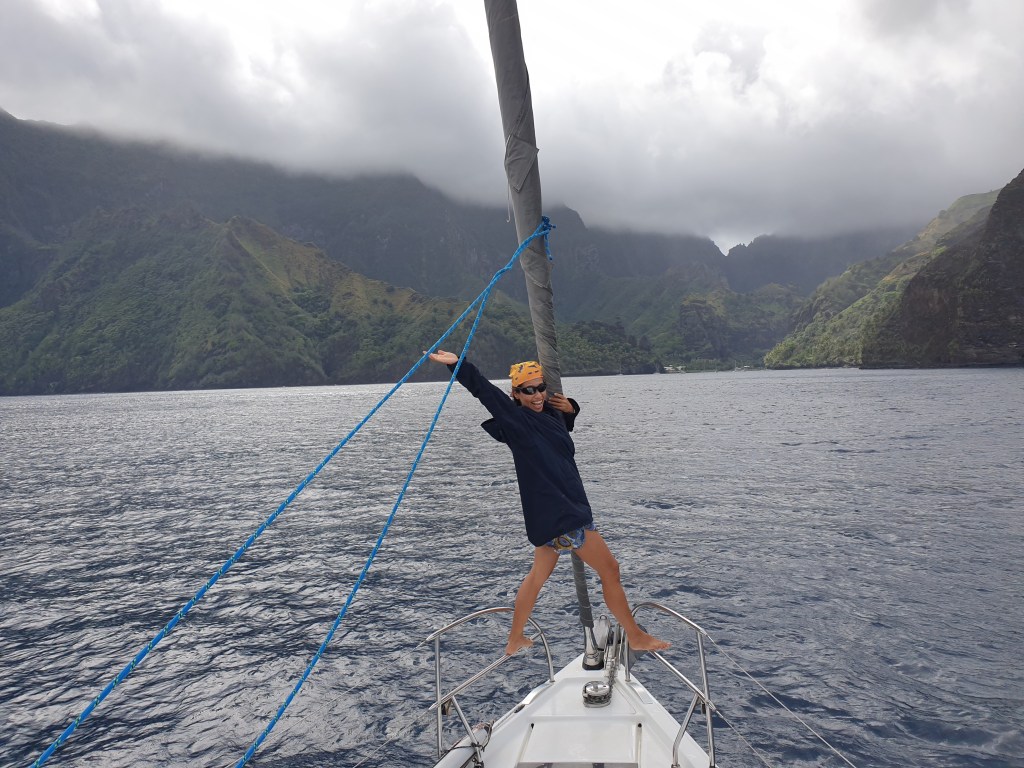
Here is a fun fact in its name. Long ago when the French came to this bay and saw the mountain formations they called it ¨La baie des verges¨ wich in English means. ¨The bay of the phallus¨. If you look at the shape of the rocks it makes sense. But later on in history when catholicism arrived, a priest consider the name was not appropriate, so he added an ¨i¨ and instead for verges it was converted to vierges. The french word vierge means virgin. So the bay nowadays is called ¨the bay of the virgins¨. Look at the picture and judge by yourself?
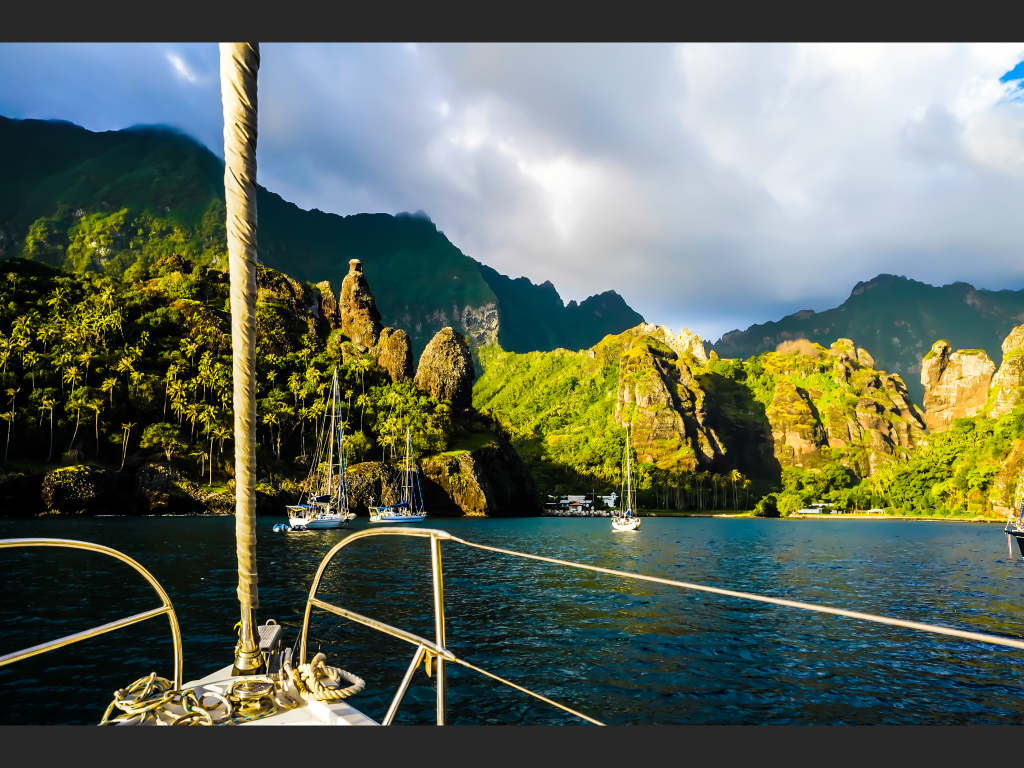
There were around 10 boats already anchored in the semi shallow part of the bay. The shawollest part was empty as it is known that there is not good holding there. (Unfortunately, we confirmed this fact is true, I’ll explain later). So we had to anchored on a deeper part at 27mts. Although we have the means to anchor on this depth it is not something that we do regularly. The process requires a lot more work than just putting the anchored down. Therefore, we did several rounds looking for a good spot and finally anchored at 30m. We had to put 50m of chain plus and extra 30m of line. We were happy with our setup and of course I wanted to get on land straight away. But I told you this was a tough crossing so it had its challenges until the end. We were ready to get on the dinghy to go on land when a big gust of 34knots came and we started drifting. The anchor didn’t hold.
Well, let me tell you I was not happy. But looking at the positive side it was better it happened at that moment. If it happened later when we were on land, it could have been more trouble. We had to pick up the anchor, chain and line. Move to a different site and anchor again. It took us two hours for the manoeuvre, but from there on, our anchor didn’t move a tiny bit for the following 10 days. And I can tell you there was wind, lots and lots of gusts at 30 something knots. Some people said it actually went to 40knots. I’m not sure but quite possible. The mountains are tall and the bay is small so it makes like a funnel with lots of wind.
Finally, we anchored!!!!! We had arrived!
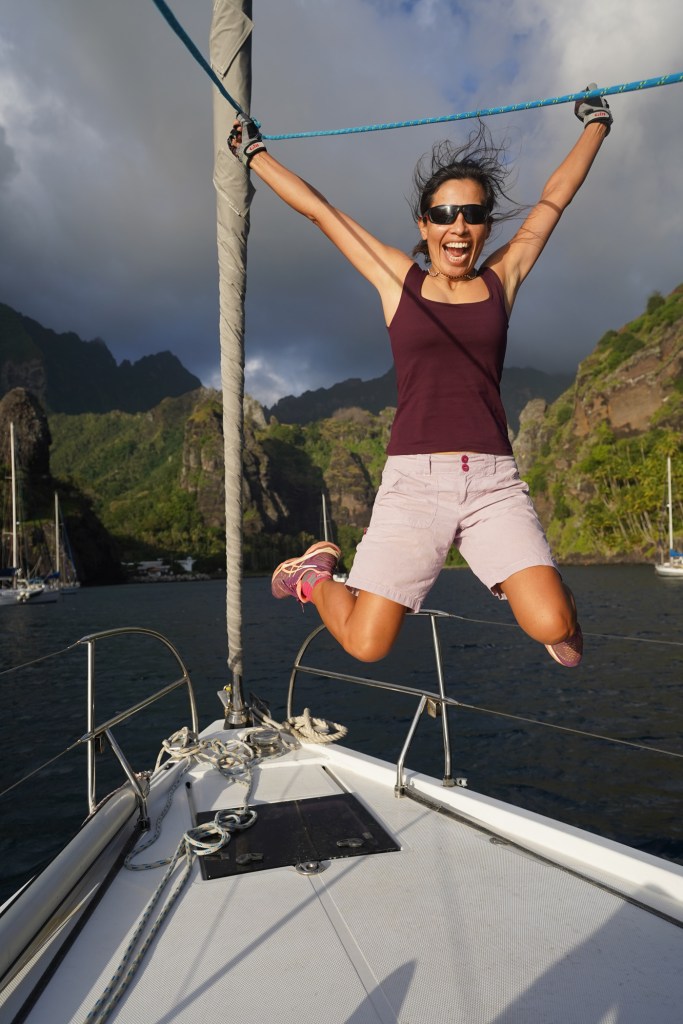
Once in Fatu Hiva we had a few days to explore. It is a fantastic place. So remote in this world but beautiful. Here some of the adventures while we were there.
Walking from Omoa to Hanavave
From Omoa to Hanavave there are 15Km on a road paved half of the way. We wanted to walk but going and return would be 30km which is too much for us for on a day. Specially because it is not flat. Lucky for us we met one of the locals that every morning at 6am leaves from Hanavave to Omoa on his boat. He works in the conservation of the Fatu Hiva Monarch bird which only lives in Fatu Hiva and is in danger of extintion. So one morning we left with him 6am sharp. On his boat it is only 20 min and he took us close to shore to show us a cave and the impressive cliffs on the way.
We had perfect weather all day long. At 6:30 am we had already arrived to Omoa. By 10 am we had breakfast, visit the town and met some local artisans. In marquises they work a lot with different local products like shells, bones, wood, stone and a lot more.
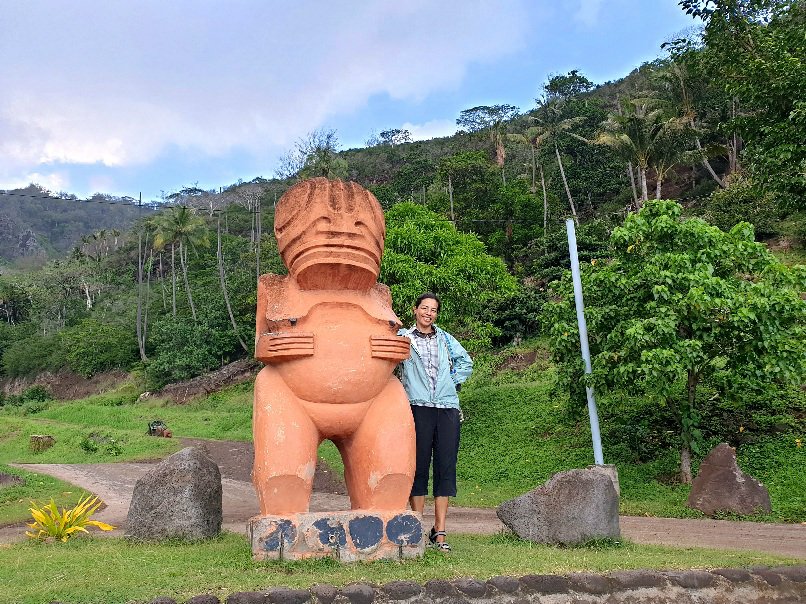
We saw a sign about crafts, so we went to have a look. We meed a lovely couple and she makes all kinds of jewellery with pearls, grains, coconut and more. My favourite pice from her was a handbag made from tapa, unfortunately I couldn’t take it with me because it can’t get wet.
The tapa is a cloth made with a tree bark by tapping and tapping. It is an art from all Polynesia. However, it is almost disappearing and in French Polynesia only few parts in Marquesas still do it. It looks like in the photo below and is used in different forms and coloured with natural poweders.
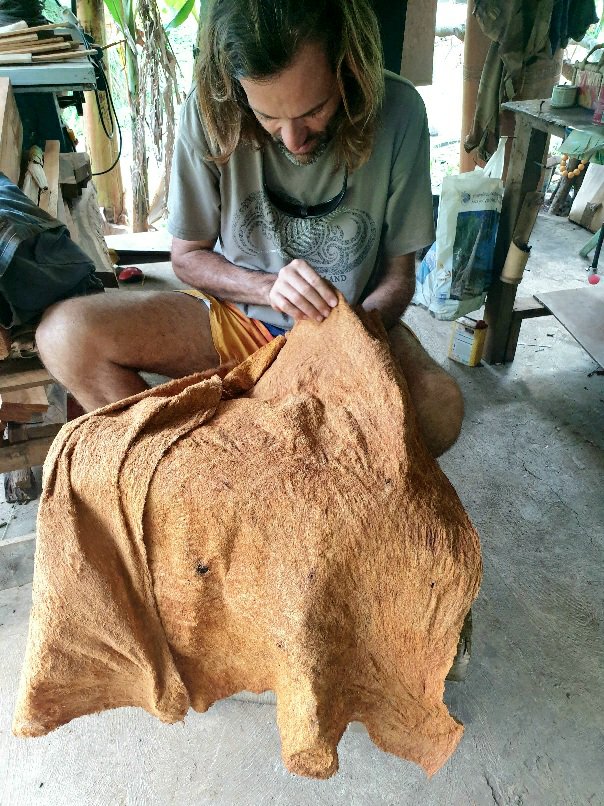
It was great to spend some time with them, who gave us a lot of tips for our visit in the Island and also talked to us plenty on the different types of crafts on how are they made. It is a lot of work. Some of the collars she had in exhibition are made from seeds. She makes it from planting the seed, grow the plan, collect the seeds and make the collar. Impressive.
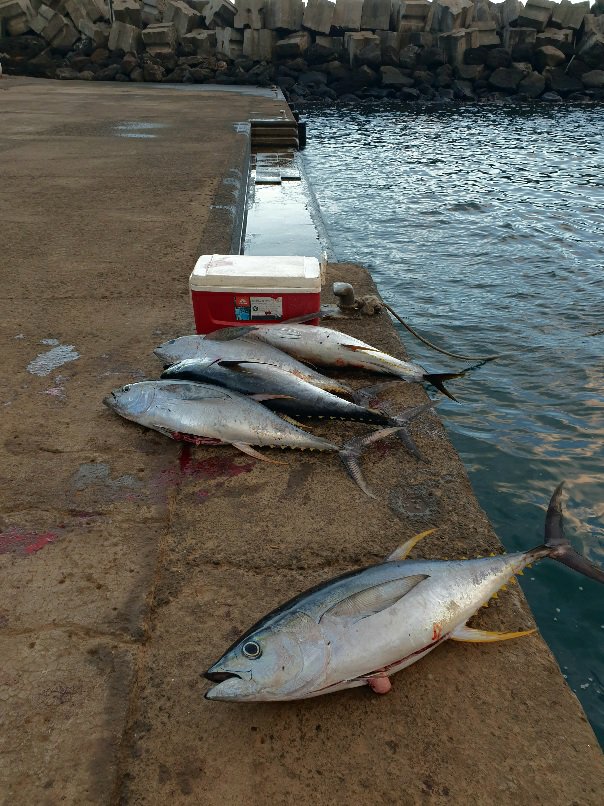
We were also refer to a good place for lunch. So around noon we went there. And try two of the local specialities. Raw fish with coconut sauce and goat. Very tasty
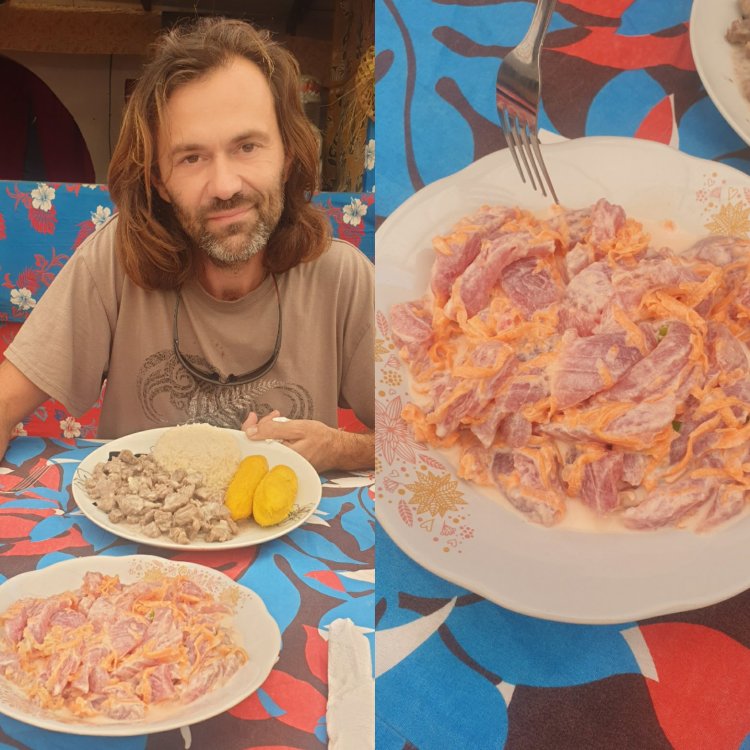
We should had probably eat less because the road ahead wasn’t easy. But the food was delicious and fresh you can’t get any more organic than that. Fish caught in morning and the goat locally grown.
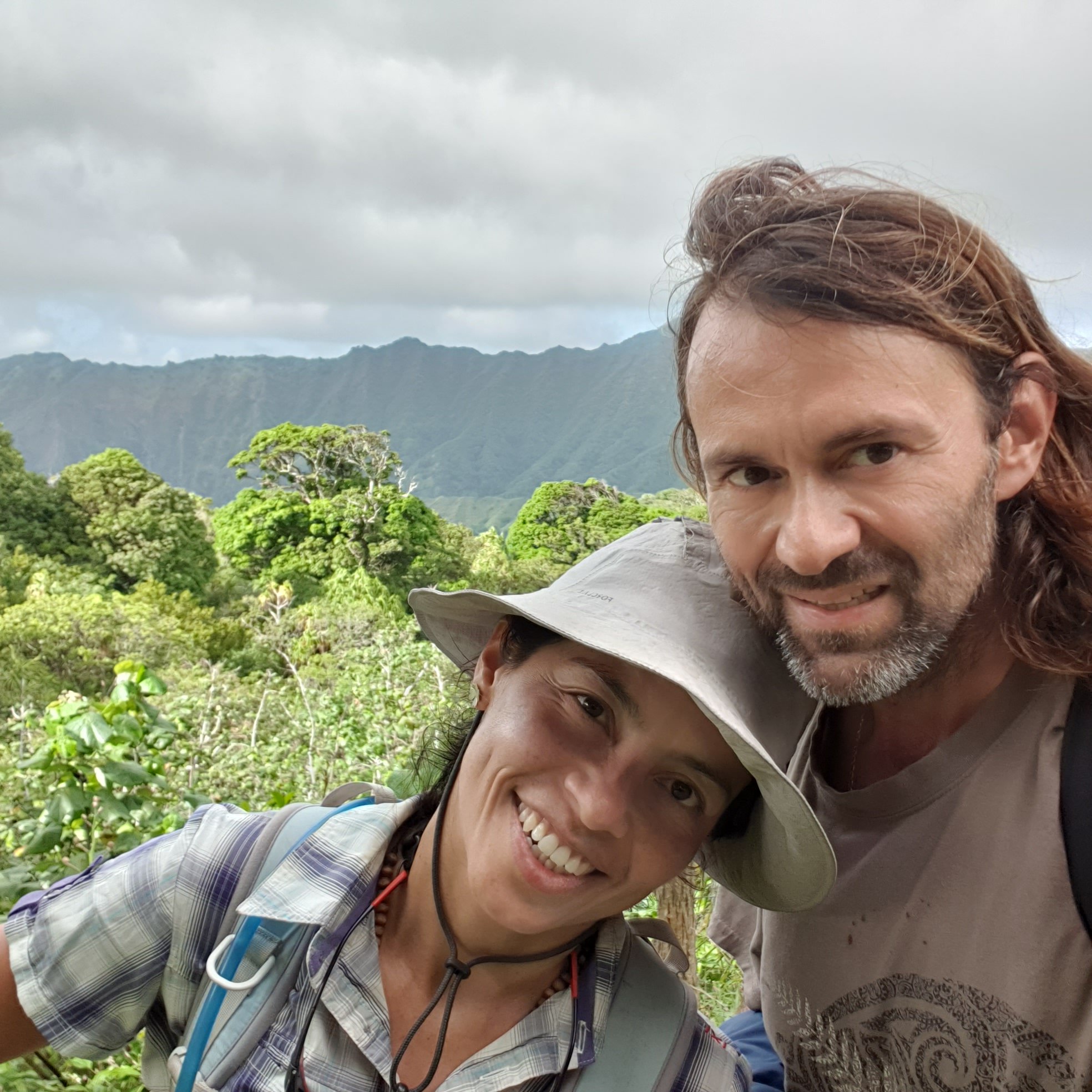
The 15 Km had its challenges as it was very steep in some places, but it was defenetly the good direction, going from Hanavave to Omoa would have been tougher. The last kms it was rewarding to be able to see the Bay of Virgins from the top with Happy Days saying hello to us. From there we could see the different currents of wind and how the boats get aling in different directions. It is easier to understand why the wind blows so strong when you are on the boat, those 34knots when we anchored the first time. Here are a few pictures.
leaving from Omoa direction Hanavave
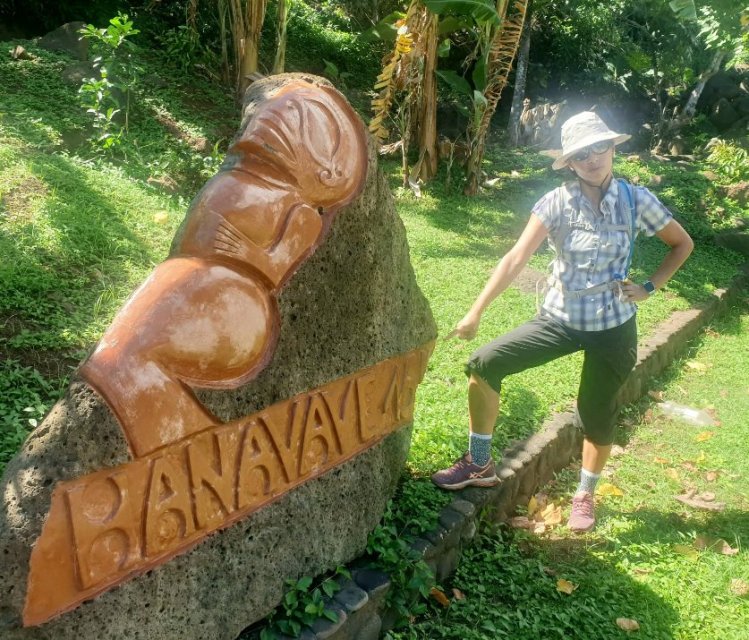
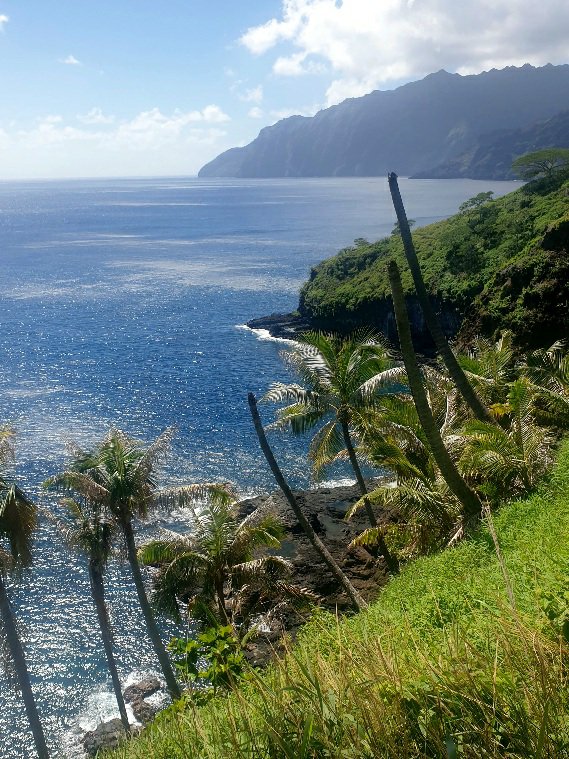
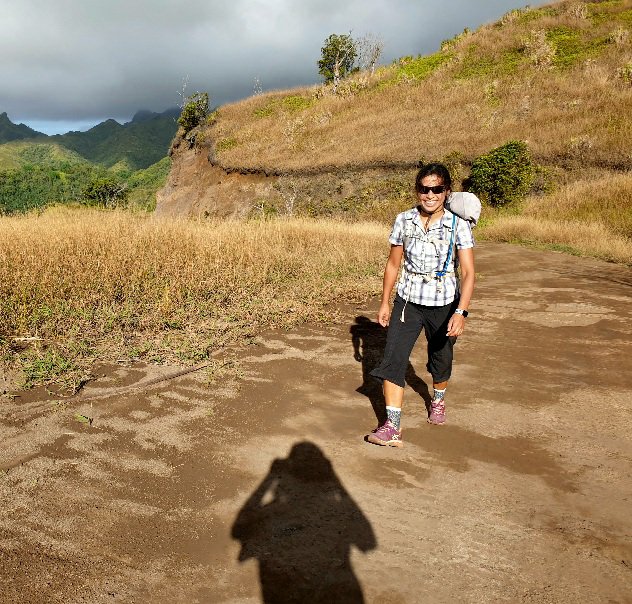
On the way
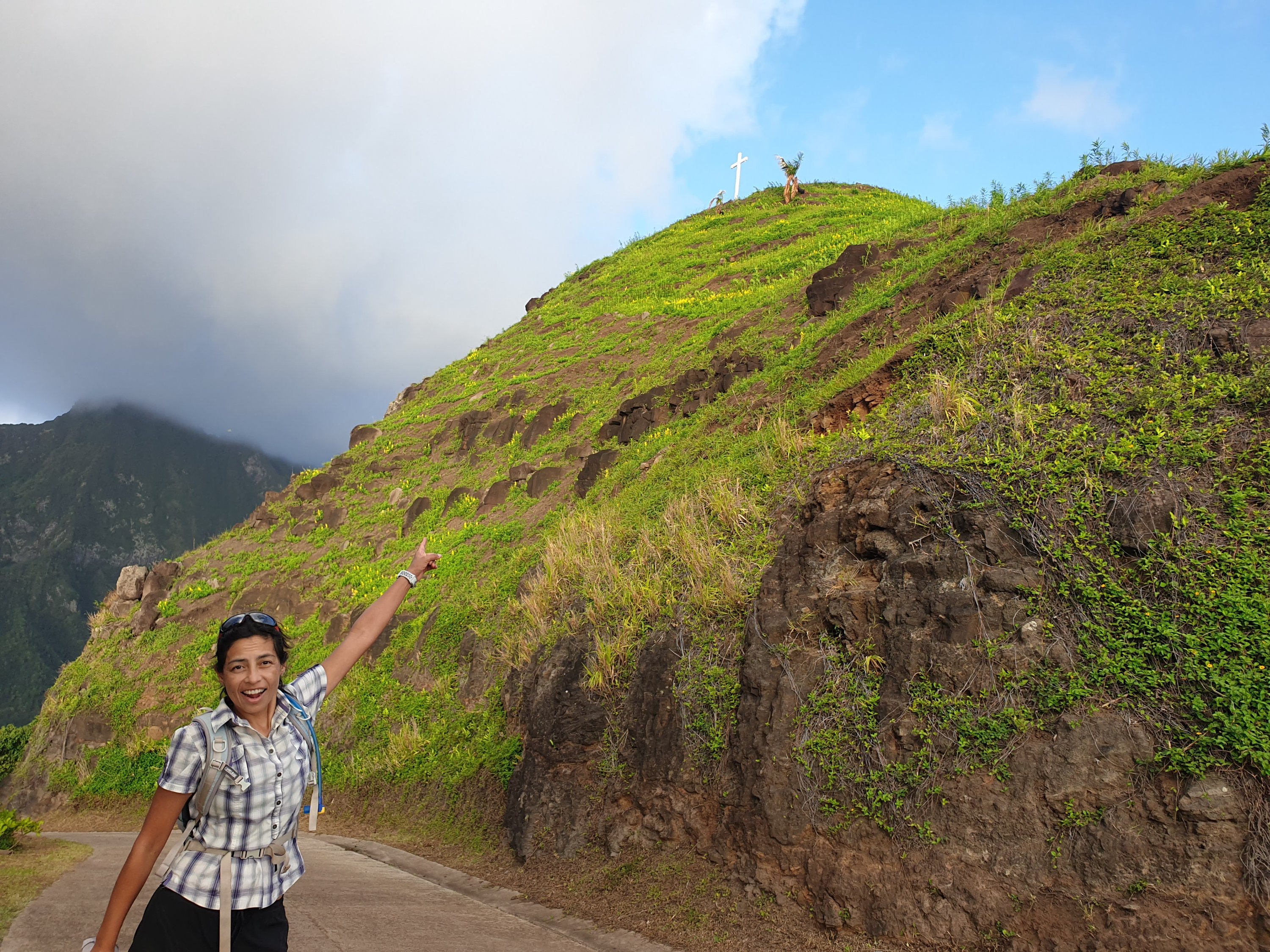
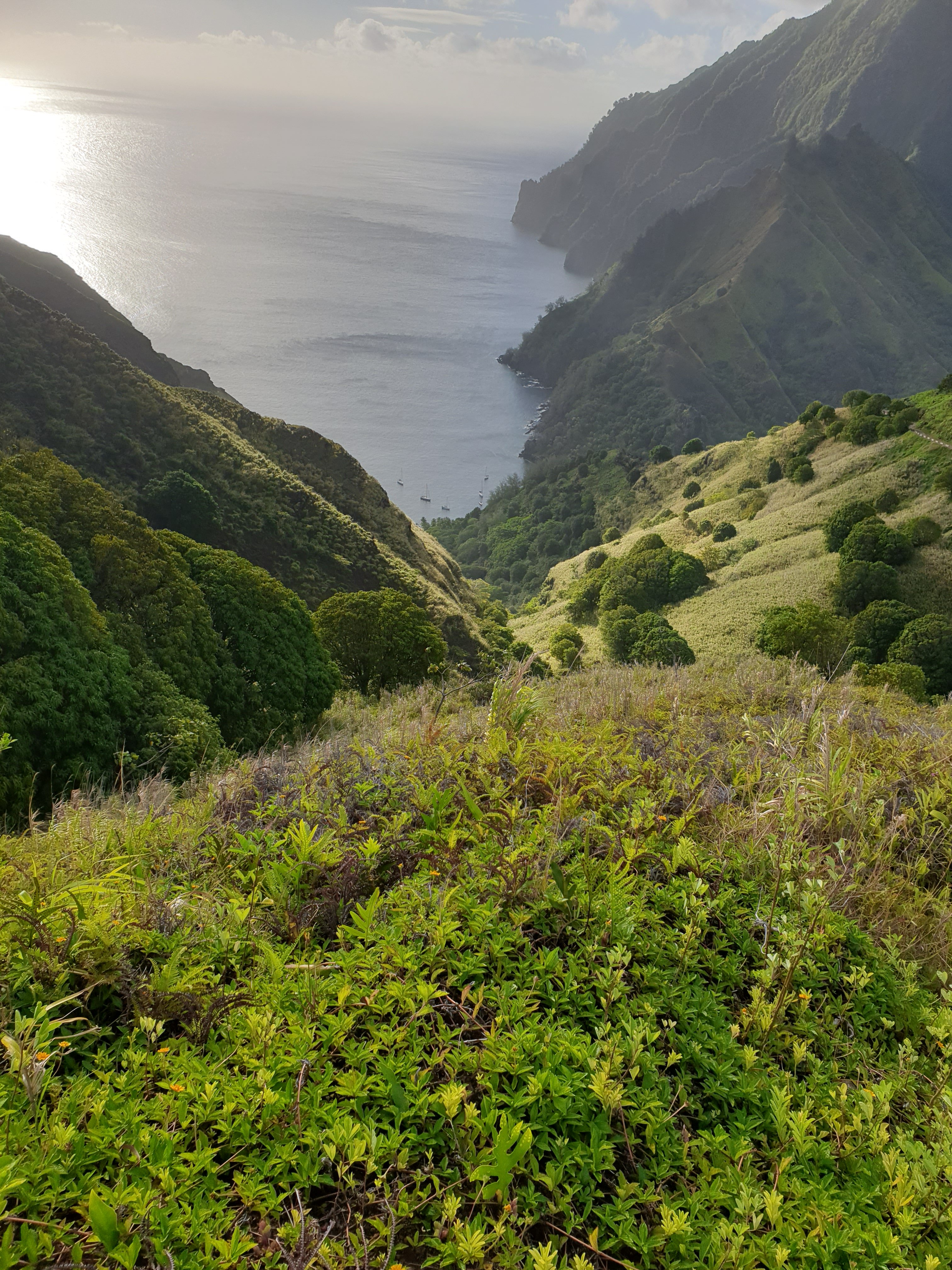
Bay of virgins from the top
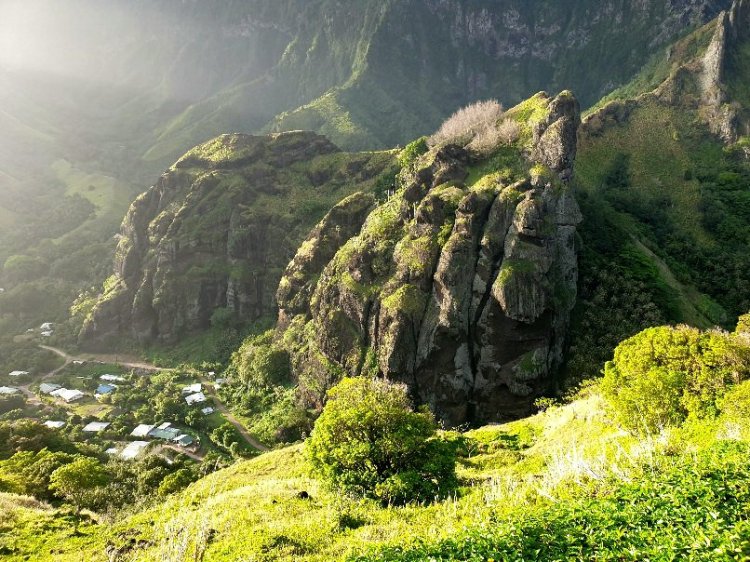
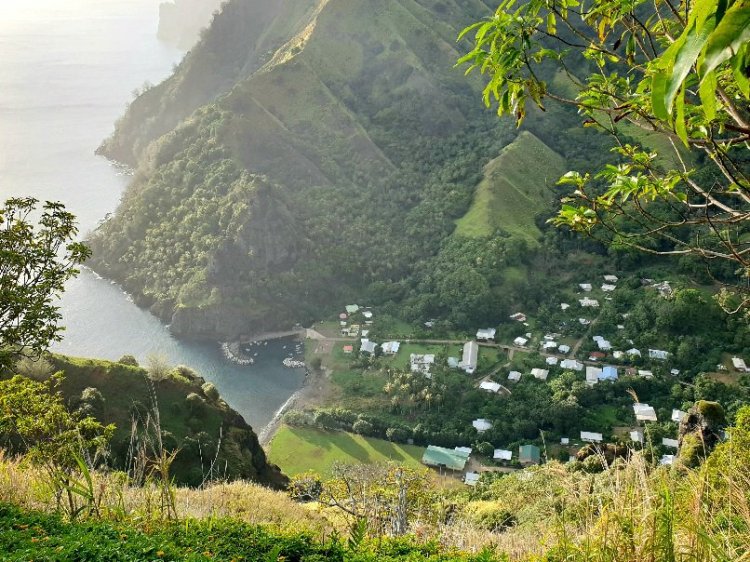
We were exhausted, but getting to the end we found a small side road almost paved on mangos, delicious
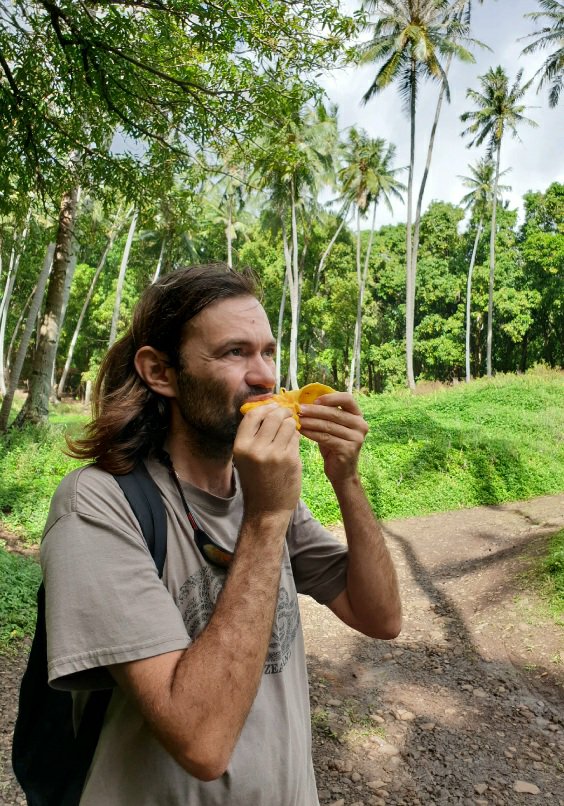
By the end of the day my watch was marking 35435 steeps!!! What a day!!!
14 July – Day of the commemoration of the French Revolution.
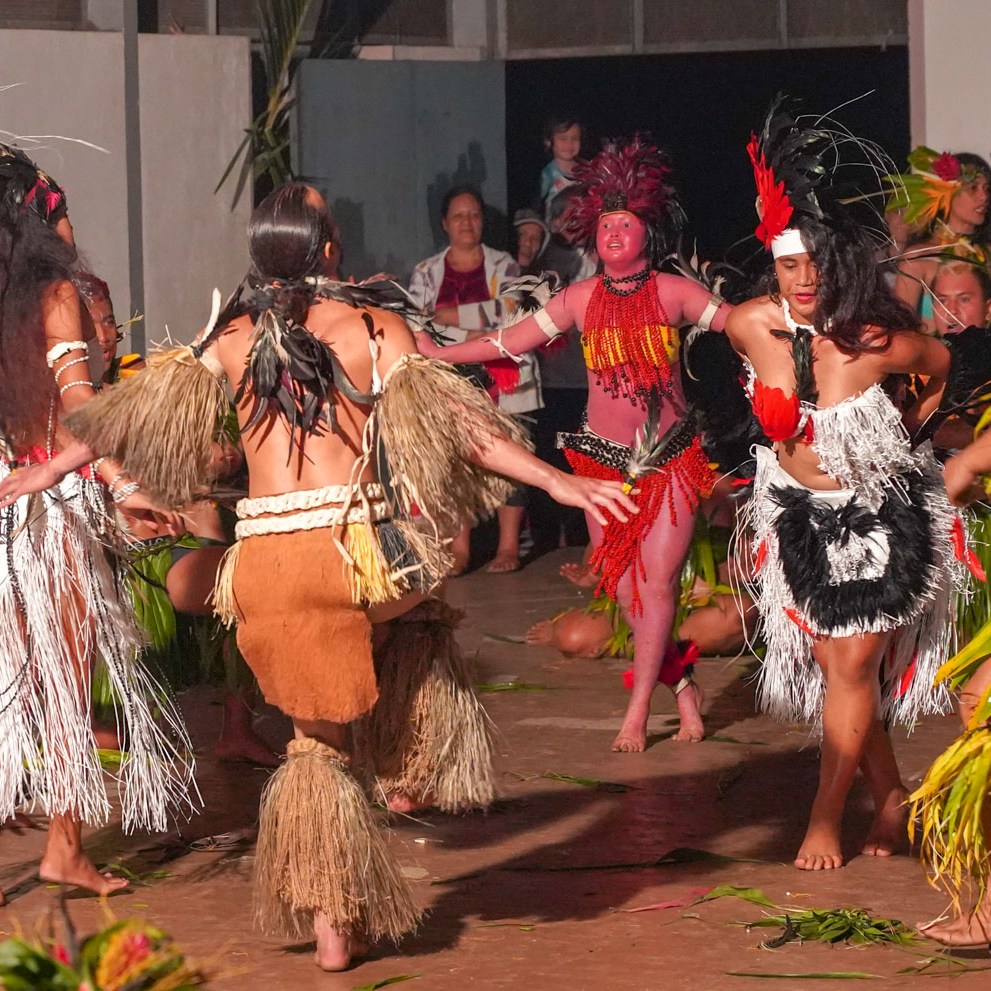
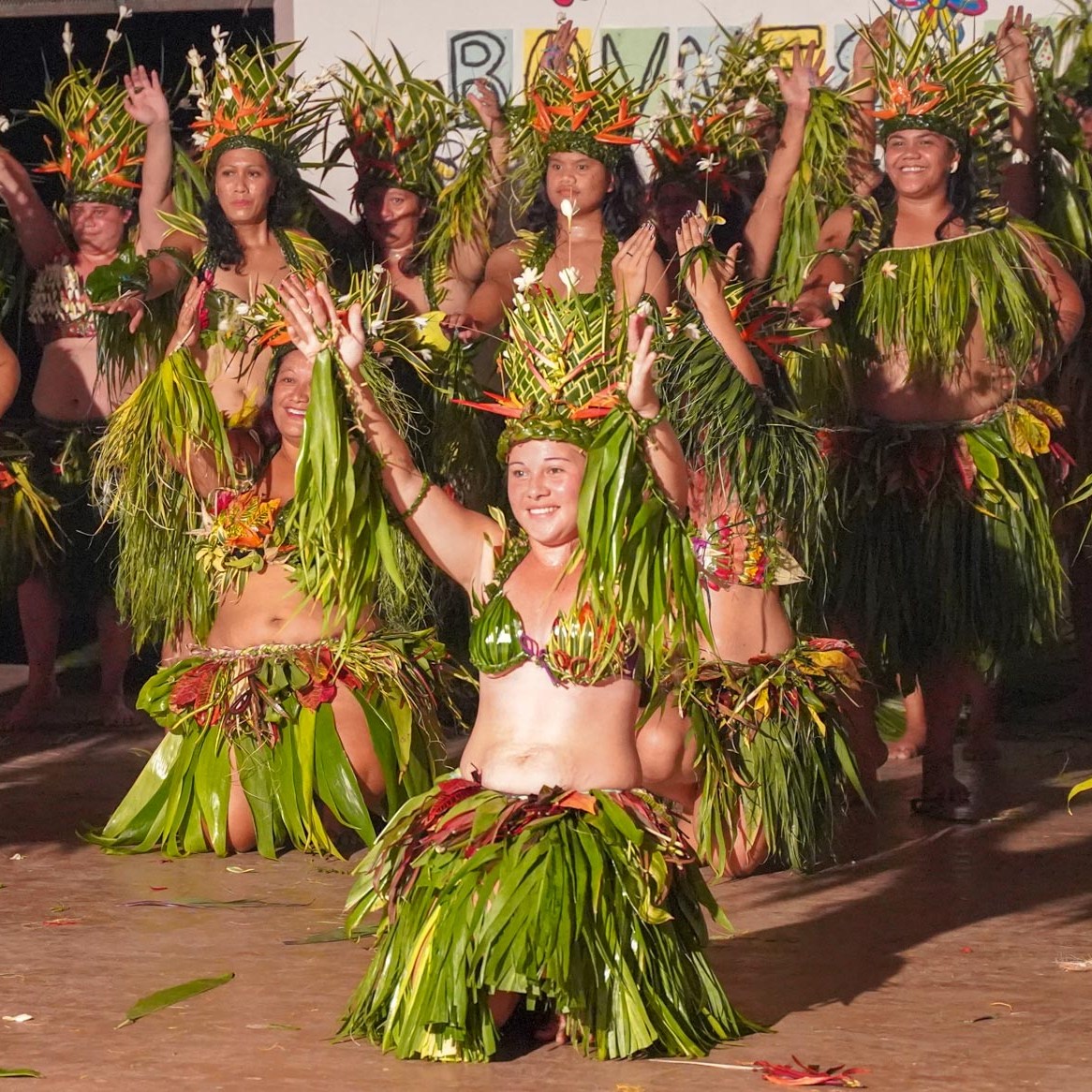
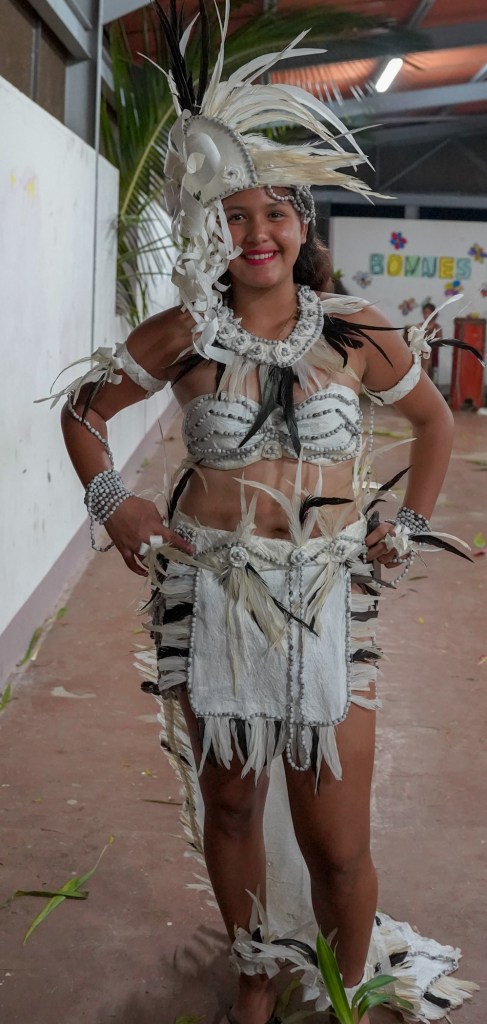
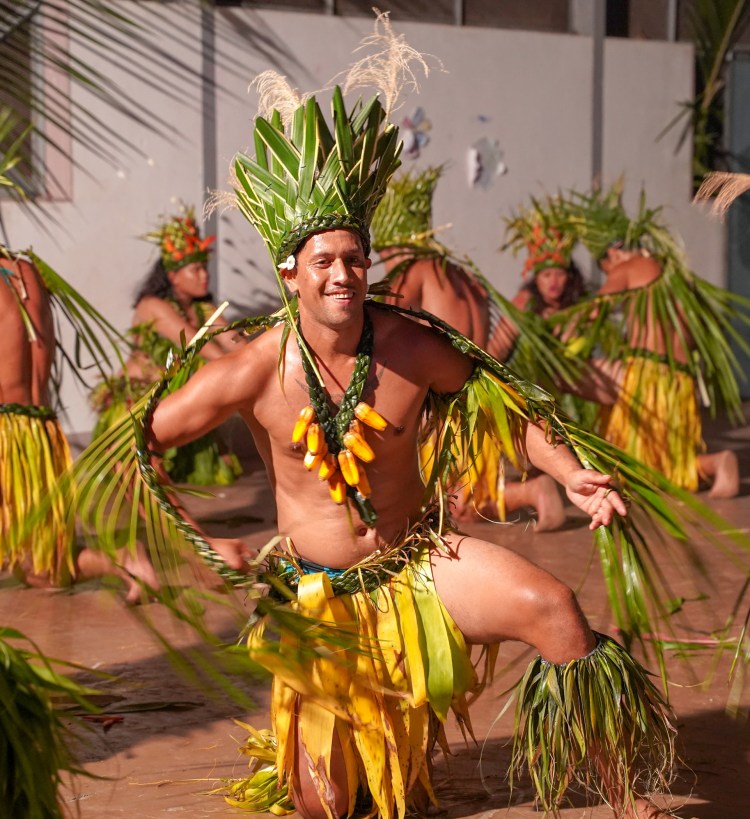
Remember I told you we missed the Heiva in Gambier, if we would have stayed we would have miss the 14 of July celebration in Hanavave, which was excellent and apparenty it was only half of the dances because of COVID.
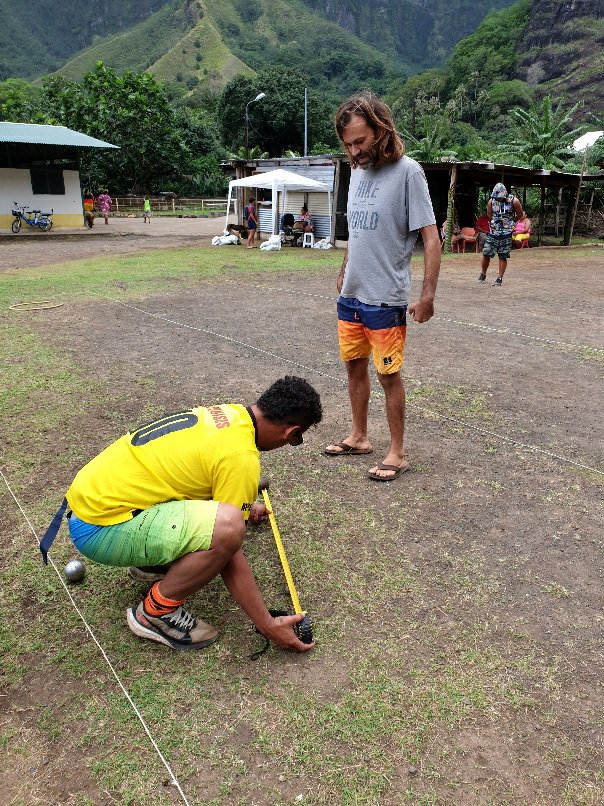
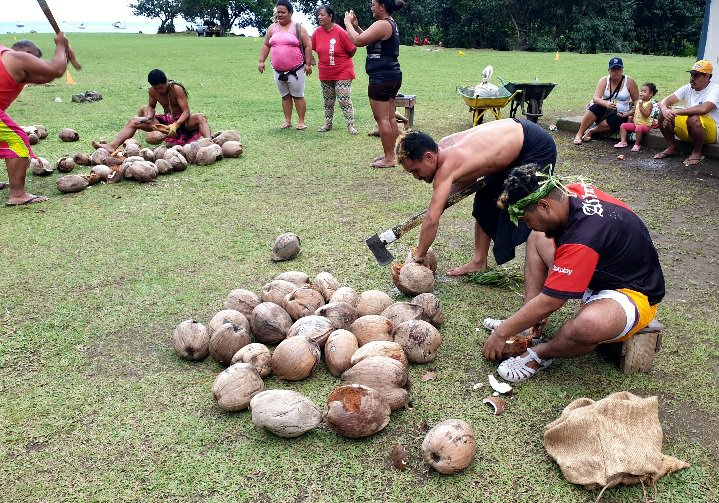
Omoa and Hanavave each have about 600 people. And about 1/3 of each village take part on the dance show for the 14 of July. Normally, they do different presentations and go between villages this year the celebrations were not share. We were in Hanavave, during the day activities for all, fishing contest, cutting copra race , ‘petangue”, kids activities and at night 4 different groups of local dancers with full customs traditional music, quite a display.
Cedric participated in the petangue contest. Although he lost on the first round eliminations, he did a good game putting his opponent in danger. A local, that for sure has more experience than Cedric.
The copra race is very impressive. By couple ladies or gents they have to cut 30 coconuts, remove the white flesh of the coco and put in a bag. The couple that finishes first is the winner. They are so quick!!
For the dances, the music, the costumes everything is still done in traditional style. Skirts, tops, belts made of tree leaves, flowers and different tree fibres. The jewels made from animal bones, sea shells, pearls, natural seeds and more. The spectacle on scene can’t be more authentic. Here are some pictures.
Anchorage action
It was way passed midnight and we were tired and deep asleep. But one of my biggest fears happened that night. Fortunately, not to us but another boat. Their anchor dragged.
The wind started picking up higher and higher. I got woken up and I could hear big gusts of wind. However, I normally estimate the wind on the high side. Cedric was still asleep, so if the captain sleeps everything is ok. His got an extra sense when something is happening he wakes up. Even on crossing while I do my watch and I go to call him for something he is awake coming to see me. The wind continued getting louder until the captain woke up and decided to make a tour outside. It was then when I knew maybe something wasn’t quite right. As we were preparing the boat to get it out of the water a lot of stuff was moved around. Therefore, he just went outside to check. I thought, if he is away he will monitor and everything will be fine. So I was ready to go back to sleep but still I could heard him moving things when suddenly he swore really loud. I knew something was wrong. He doesn’t swear for nothing. I jumped outside in a blink of an eye to see what needed to be done.
The scene was dramatic, all boats in the anchorage balancing from one side to the other and a big 44 catamaran, who arrived last and anchored closest to shore, in the first row, where everybody knew it wasn’t good holding ground, had dragged and was moving freely in the middle of the bay almost crashing on a pogo 850. Capitan and crew on the small boat were awake and making a manoeuvre on the anchored but captain and crew on the dragging catamaran was asleep. Not a single light on them. Couple of other boats were awake by the gusts and we all started lighting the Cata until they finally woke up and controlled their boat. By then the Pogo 850 had lifted their anchored and motored out of the bay.
I’m not exactly sure of the details of what happened, but the Pogo 850 dragged as well trying to escape the crash of the Cata and as a result it hit a 45ft metal boat (which is kept pristine and shine). Then the Pogo kept dragging and passed besides us, closer than I would have like it but didn’t touch us. The cata finally picked up his anchored and motor out of the bay.
We stayed awake on the radio in case anybody would need help and monitor our anchor while the wind kept blowing. Motor on just is case.
Finally the wind ease a bit everyone seemed to relaxed and the anchorage was back asleep.
The following day on the aftermath, we heard the Cata declaring he didn’t touch anybody and he was not responsible for any damages. The Pogo took the worst part, apparently, as they tried to escape the crash of the sleeping cata, their chain got caught on their keel and started drifting as well. They were responsible for the hit to the metal boat. A small scratch on the 45ft blue metal boat, it wasn’t much but it is Fatu Hiva, I think it will take sometime before they can get somewhere to repair that. Crazy as it is, you need to get hit first then you can complain, well it is the same with cars anyway.
We did a few more walks, visited some waterfalls, met more local artist, shared a BBQ with a full pork locally raised with boaties from the anchorage and more. The next stop is Hiva Oa where Happy Days as a place reserved on land and we are getting to the end of this great adventures, getting to Australia hopefully end of August.
I’m just going to leave you with a video… look all the way until the end. You’ll love the other locals we met!
 Happy Days